 …
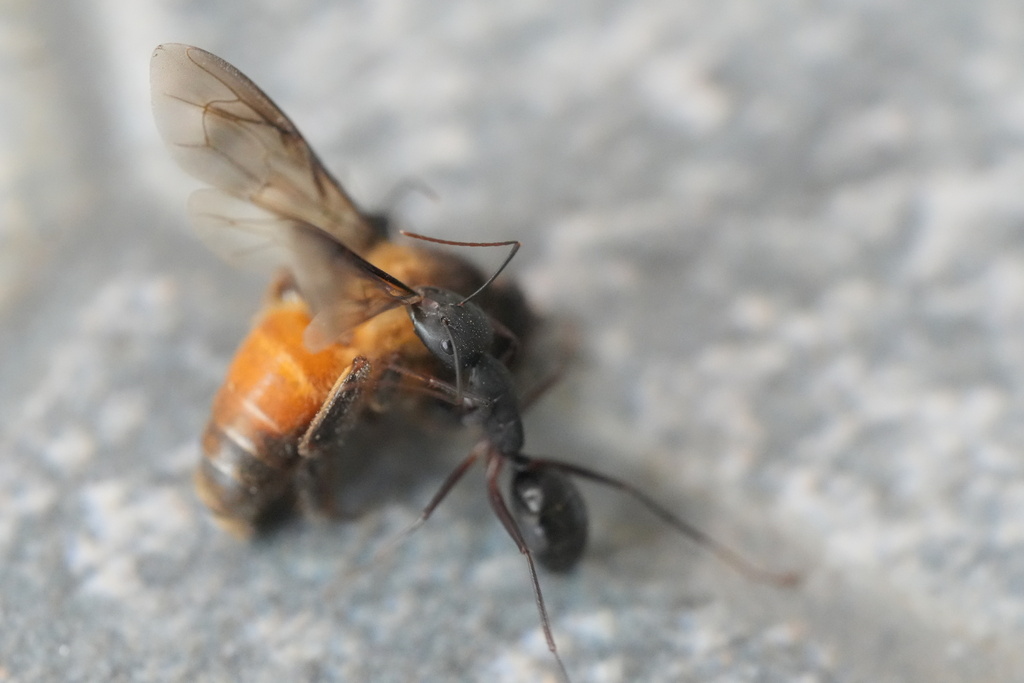
Indian Black Ant
Camponotus compressus
Insectstrong against fungi, fish
Common
Swarm
While active with another insect in play, each of its attacks also hits the opposing bench for 10, without knocking them out (20 with two others).
30

39
Indian Black Ant
Camponotus compressus
Insectstrong against fungi, fish
Common
While active with another insect in play, each of its attacks also hits the opposing bench for 10, without knocking them out (20 with two others).
Camponotus compressus
Photo: © Aparna Shyam (original photo) · CC BY 4.0 (licence text) · cropped
Strong against: it deals 20% more damage to them. Weak against: these types deal 20% more damage to it.
Camponotus compressus, sometimes known as the Indian black ant, is a type of ground-nesting species of ant found in India and Southeast Asia. It is a frequent visitor to toilets as it consumes urea. It is one of the many species which tends plant-sap-sucking insects like aphids and tree hoppers. They add nutrients into the soil through their discarded waste piles These ants stroke their antenna on the hind parts of these insects stimulating them to excrete a sugar rich liquid, called honeydew, which the ants consume. In return, they are known to protect the insects from predators like ladybugs. These ants range from red to black and some times appear slightly yellow in colour. It is known to be the main food of the Indian pangolin.
Excerpt from the Wikipedia article Camponotus compressus, by its authors, under the CC BY-SA 4.0 licence.
No global status on the IUCN Red List: that’s what makes this card Common.
Every Common card has 100 points, shared between HP, ATK and DEF:
How they’re shared out:

 DEF 39