 …
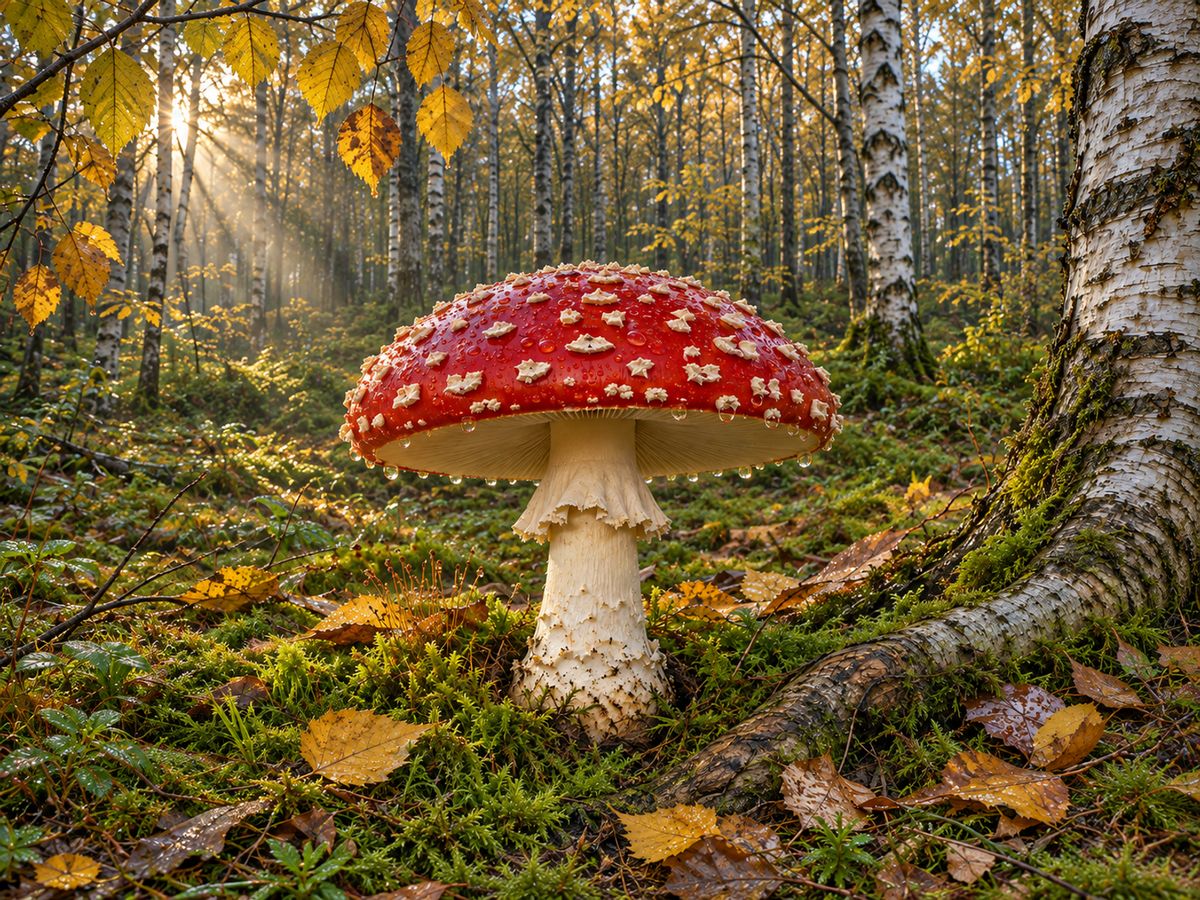
Fly Agaric
Amanita muscaria
Fungusstrong against amphibians, reptiles
Legendary
Muscimol
When it attacks, its target can’t attack or retreat on its next turn.
76
47
Fly Agaric
Amanita muscaria
Fungusstrong against amphibians, reptiles
Legendary
When it attacks, its target can’t attack or retreat on its next turn.
Amanita muscaria
Reconstruction: © Wikapi (original image) · original illustration · cropped
Strong against: it deals 20% more damage to them. Weak against: these types deal 20% more damage to it.
Amanita muscaria, commonly known as the fly agaric or fly amanita or simply red toadstool, is a basidiomycete fungus of the genus Amanita. Its name may come from its historical use to kill flies or from the effects it causes (a medieval belief held that flies could enter the head and cause madness). It is a distinctive, large, white-gilled mushroom typically featuring a bright red cap covered with white warts. The complex genetic diversity of A. muscaria suggests that it is a species complex. It is a widely distributed mushroom native to temperate and boreal forests of the Northern Hemisphere, now also naturalised in the Southern Hemisphere, forming symbiotic relationships with various trees and spreading invasively in some regions.
Ingestion of the mushroom can cause poisoning, especially in children and those seeking its hallucinogenic effects, due to psychoactive compounds like muscimol and ibotenic acid; however, fatal poisonings are extremely rare. Parboiling reduces toxicity; drying converts ibotenic acid into muscimol while retaining psychoactive effects. Some cultures use it as food after preparation. Indigenous peoples of Siberia used A. muscaria and other Amanita species as an entheogen. It has been controversially linked to Santa Claus, Viking berserkers, Vedic soma, and early Christianity, though evidence is sparse and disputed. Its rise in the 2020s as a hallucinogen has led to governmental scrutiny.
Abridged excerpt from the Wikipedia article Amanita muscaria, by its authors, under the CC BY-SA 4.0 licence.
No global status on the IUCN Red List. One of the 10 Legendary fungi: that’s what makes this card Legendary.
Every Legendary card has 175 points, shared between HP, ATK and DEF:
How they’re shared out:

 DEF 47