 …
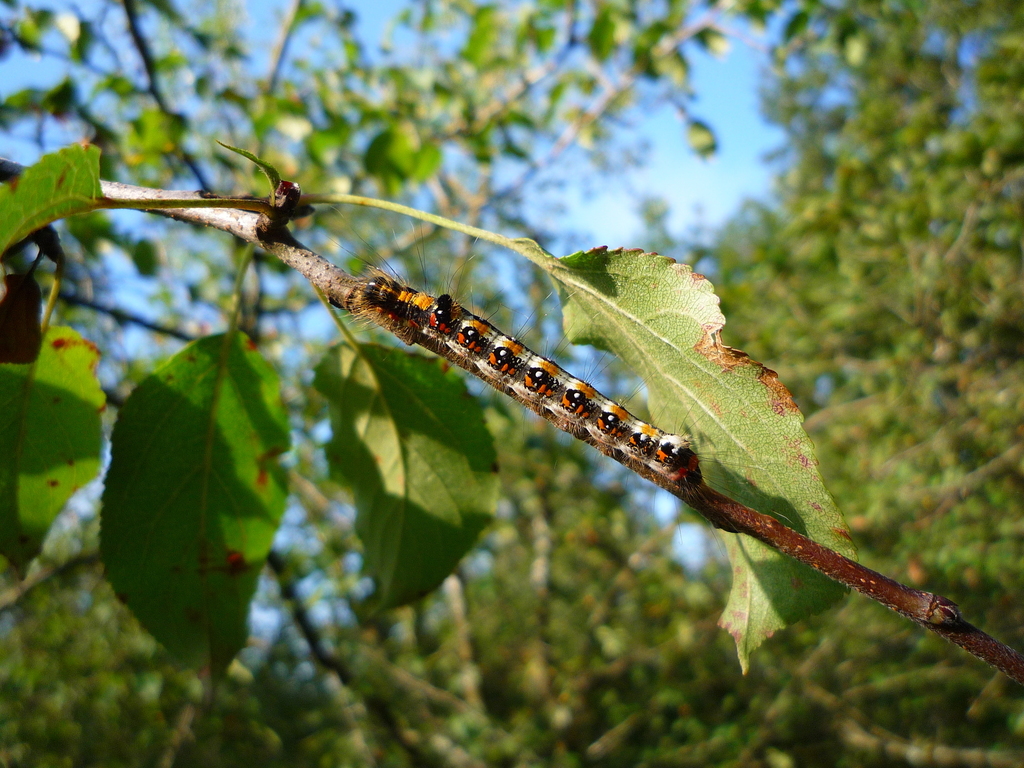
Dark Dagger
Acronicta tridens
Insectstrong against fungi, fish
Common
Swarm
While active with another insect in play, each of its attacks also hits the opposing bench for 10, without knocking them out (20 with two others).
39

40
Dark Dagger
Acronicta tridens
Insectstrong against fungi, fish
Common
While active with another insect in play, each of its attacks also hits the opposing bench for 10, without knocking them out (20 with two others).
Acronicta tridens
Photo: ikernf (original photo) · CC0 (licence text) · cropped
Strong against: it deals 20% more damage to them. Weak against: these types deal 20% more damage to it.
The dark dagger (Acronicta tridens) is a moth of the family Noctuidae. The species was first described by Michael Denis and Ignaz Schiffermüller in 1775. It is distributed throughout Europe (from southern Fennoscandia to the Balkans and Italy), Turkey, the Near East, the European part of Russia, southern Siberia, the Ural, the Russian Far East (Primorye, southern Khabarovsk, southern Amur region and Sakhalin), the Korean Peninsula, China and Japan (Hokkaido).
This species has grey forewings marked with bold black "daggers". The hindwings of the males are white, those of the females dirty grey. The wingspan is 35–43 mm (1.4–1.7 in). Adults of this species are extremely similar to the grey dagger (Acronicta psi). Despite the common name, the dark dagger is usually the paler of the two species and the white hindwings of the male are usually diagnostic. However, the only reliable way of distinguishing adults of the two species is by examination of the genitalia. The larvae, however, are very different. This species flies at night in June and July and is attracted to light and sometimes to sugar.
The larva is black, marked with red and white stripes, without the bold yellow markings and prominent horn of the larva of the grey dagger. It feeds on a variety of plants. The species overwinters as a pupa, sometimes spending two winters in this form.
Excerpt from the Wikipedia article Dark dagger, by its authors, under the CC BY-SA 4.0 licence.
No global status on the IUCN Red List: that’s what makes this card Common.
Every Common card has 100 points, shared between HP, ATK and DEF:
How they’re shared out:

 DEF 40