 …
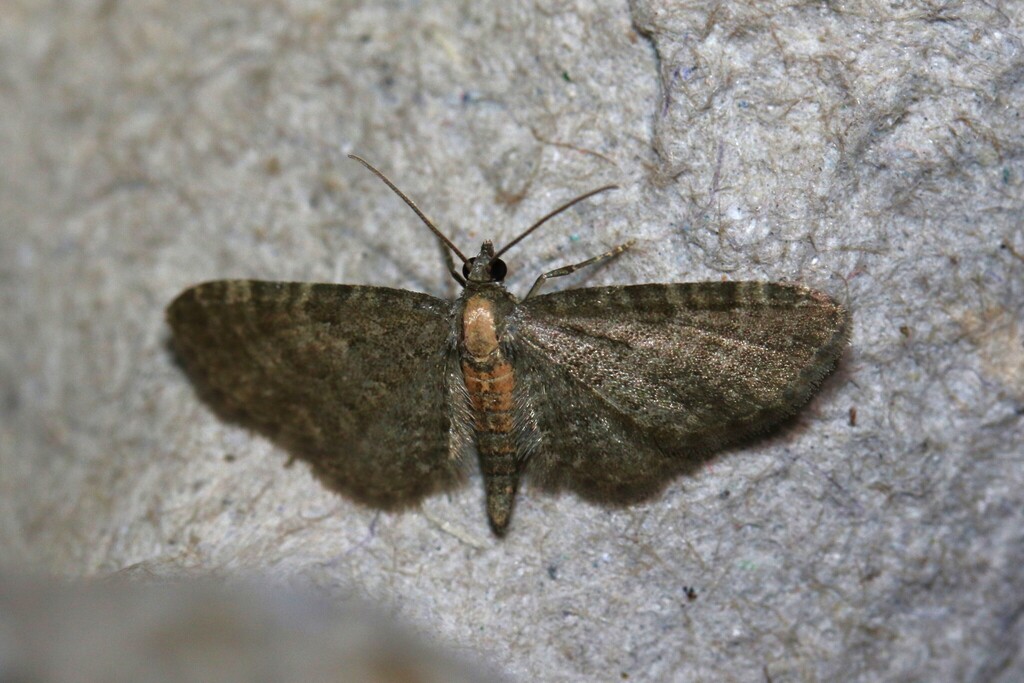
Haworth's Pug
Eupithecia haworthiata
Insectstrong against fungi, fish
Common
Swarm
While active with another insect in play, each of its attacks also hits the opposing bench for 10, without knocking them out (20 with two others).
38

39
Haworth's Pug
Eupithecia haworthiata
Insectstrong against fungi, fish
Common
While active with another insect in play, each of its attacks also hits the opposing bench for 10, without knocking them out (20 with two others).
Eupithecia haworthiata
Photo: © Tommy Andriollo (original photo) · CC BY 4.0 (licence text) · cropped
Strong against: it deals 20% more damage to them. Weak against: these types deal 20% more damage to it.
Eupithecia haworthiata, or Haworth's pug, is a moth of the family Geometridae. The species was first described by Henry Doubleday in 1856. It can be found in western, south and central Europe, Asia Minor, the Caucasus and east across the Palearctic to Amur. It occurs in the Alps up to 1800 meters, in the Apennines up to 1400 metres and in the Balkan mountains up to 1500 m above sea level.
The wingspan is 12–14 mm. The ground colour of the forewings is grey brown. The crosslines are in pairs. A central spot is missing. There is a faint discal stain on the hindwings. The colour of the first abdominal segments is strongly yellow, orange or reddish.
The moths flies from April to August depending on the location.
The caterpillars feed on Clematis vitalba and cultivated Clematis species. The pupa hibernates and often 2 or even 3 winters are passed in this state.
Excerpt from the Wikipedia article Eupithecia haworthiata, by its authors, under the CC BY-SA 4.0 licence.
No global status on the IUCN Red List: that’s what makes this card Common.
Every Common card has 100 points, shared between HP, ATK and DEF:
How they’re shared out:

 DEF 39