 …
Yellow Horned
Achlya flavicornis
Insectstrong against fungi, fish
Common
Swarm
While active with another insect in play, each of its attacks also hits the opposing bench for 10, without knocking them out (20 with two others).
40

39
Yellow Horned
Achlya flavicornis
Insectstrong against fungi, fish
Common
While active with another insect in play, each of its attacks also hits the opposing bench for 10, without knocking them out (20 with two others).
Achlya flavicornis
Photo: Andreas Manz (original photo) · CC0 (licence text) · cropped
Strong against: it deals 20% more damage to them. Weak against: these types deal 20% more damage to it.
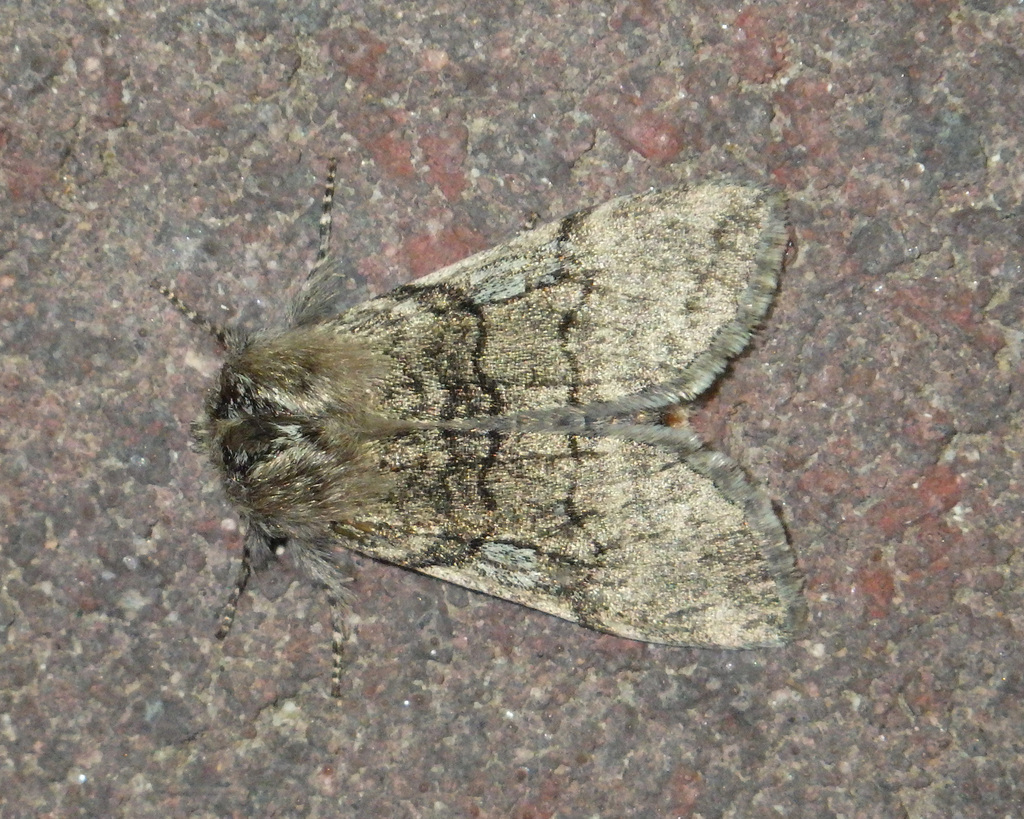
Achlya flavicornis, the yellow horned, is a moth of the family Drepanidae. The species was first described by Carl Linnaeus in his 1758 10th edition of Systema Naturae. It is found from Europe to the eastern Palearctic ecozone.
The wingspan is 35–40 mm. The length of the forewings is 17–20 mm. The ground colour is greenish grey, sometimes speckled or dusted with darker grey. The reniform and orbicular marks are generally clear and distinct, but in some examples they are united and form a whitish blotch outlined in blackish; the cross lines are usually well defined, but in the dark grey dusted form are very obscure. The moth flies from February to April depending on the location.
The final instar larva is either off white all over or off white below the spiracles and darker greyish or olive green dorsally. There is a row of black spots and finely black-edged white dots. The insect overwinters as a pupa in a cocoon, amongst leaf litter.
The larvae feed on birch.
Excerpt from the Wikipedia article Achlya flavicornis, by its authors, under the CC BY-SA 4.0 licence.
No global status on the IUCN Red List: that’s what makes this card Common.
Every Common card has 100 points, shared between HP, ATK and DEF:
How they’re shared out:

 DEF 39