 …
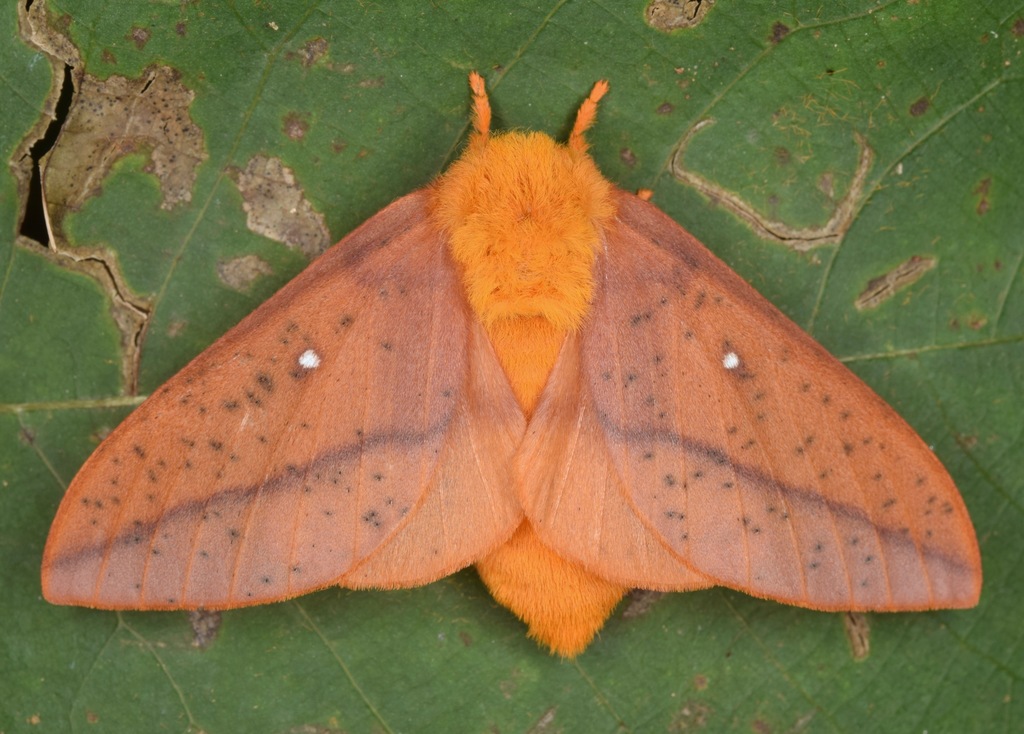
Yellow-striped Oakworm Moth
Anisota peigleri
Insectstrong against fungi, fish
Common
Swarm
While active with another insect in play, each of its attacks also hits the opposing bench for 10, without knocking them out (20 with two others).
41

36
Yellow-striped Oakworm Moth
Anisota peigleri
Insectstrong against fungi, fish
Common
While active with another insect in play, each of its attacks also hits the opposing bench for 10, without knocking them out (20 with two others).
Anisota peigleri
Photo: © skitterbug (original photo) · CC BY 4.0 (licence text) · cropped
Strong against: it deals 20% more damage to them. Weak against: these types deal 20% more damage to it.
Anisota peigleri, the yellowstriped oakworm, is a moth of the family Saturniidae. The species was first described by Jules C. E. Riotte in 1975. It is found in the United States from south-eastern Kentucky, south-western Virginia, eastern Tennessee and western North Carolina south through western South Carolina and central Georgia through central Alabama into north-central Florida.
It was described as a species in 1975 and is similar to and was previously identified as Anisota senatoria (J.E. Smith, 1797).
The wingspan is 43–69 mm. Adults are on wing from mid July to late August in one generation. Adults are on wing during the day. Mating takes place from midmorning until midafternoon.
The larvae mainly feed on various oak species, including Quercus palustris. They feed in tight groups throughout their development. Fully grown caterpillars pupate and overwinter in shallow underground chambers. Adults do not feed.
Excerpt from the Wikipedia article Anisota peigleri, by its authors, under the CC BY-SA 4.0 licence.
No global status on the IUCN Red List: that’s what makes this card Common.
Every Common card has 100 points, shared between HP, ATK and DEF:
How they’re shared out:

 DEF 36