 …
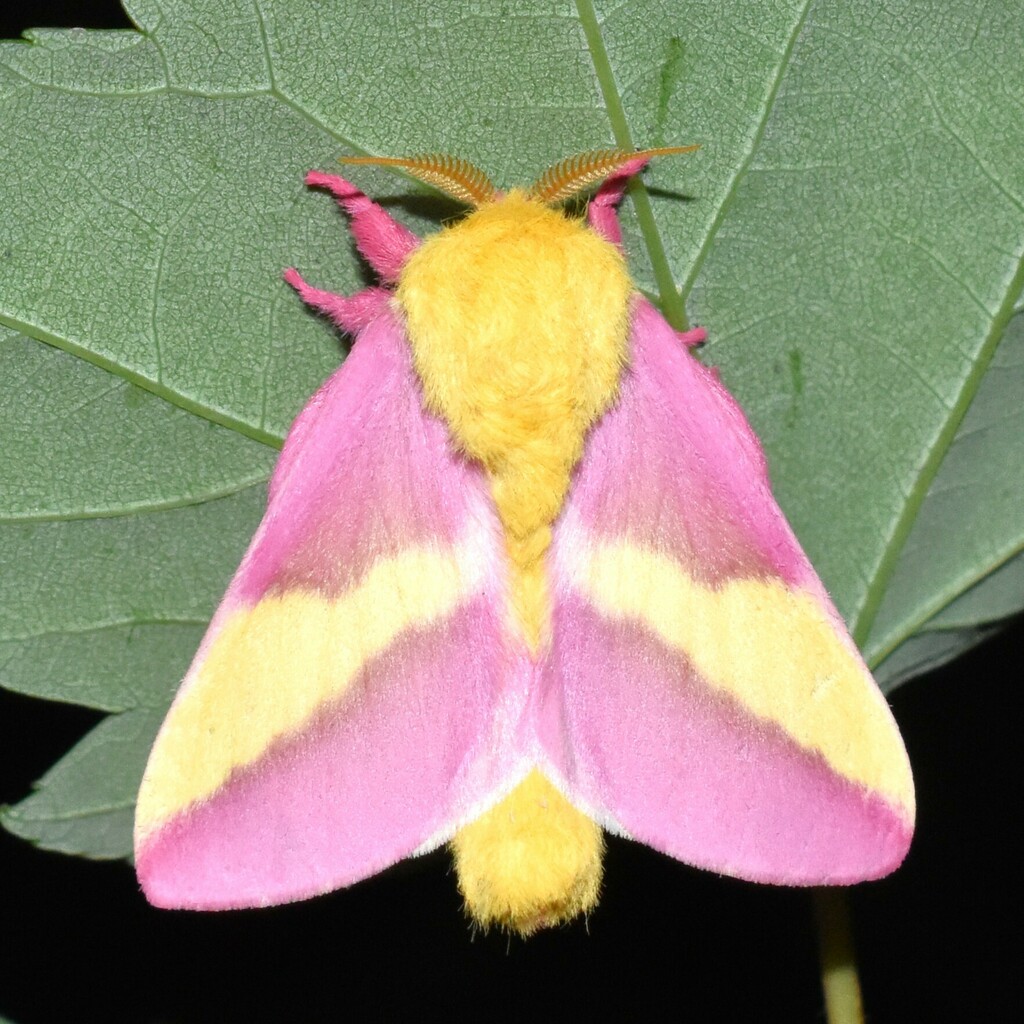
Rosy Maple Moth
Dryocampa rubicunda
Insectstrong against fungi, fish
Common
Swarm
While active with another insect in play, each of its attacks also hits the opposing bench for 10, without knocking them out (20 with two others).
42

34
Rosy Maple Moth
Dryocampa rubicunda
Insectstrong against fungi, fish
Common
While active with another insect in play, each of its attacks also hits the opposing bench for 10, without knocking them out (20 with two others).
Dryocampa rubicunda
Photo: © Jeff Niznik (original photo) · CC BY-SA 4.0 (licence text) · cropped
Strong against: it deals 20% more damage to them. Weak against: these types deal 20% more damage to it.
Dryocampa rubicunda, the rosy maple moth, is a small North American moth in the family Saturniidae, also known as the great silk moths. It was first described by Johan Christian Fabricius in 1793. The species is known for its wooly body and pink and yellow coloration, which varies from cream or white to bright pink or yellow. Males have bushier antennae than females, which allow them to sense female pheromones for mating.
As the common name of the species implies, the preferred host trees are maple trees. Adult females lay their yellow ovular eggs in groups of 10 to 40 on the underside of maple leaves. The emerging caterpillars, also known as the greenstriped mapleworm, mainly feed on the leaves of their host maple trees, particularly red maple, silver maple, and sugar maple. Since the caterpillars eat the entire leaf blade, in dense populations, caterpillars have been known to defoliate trees, resulting in aesthetic rather than permanent damage. However, like all other Saturniid moths, the adult moths do not eat.
Excerpt from the Wikipedia article Dryocampa rubicunda, by its authors, under the CC BY-SA 4.0 licence.
No global status on the IUCN Red List: that’s what makes this card Common.
Every Common card has 100 points, shared between HP, ATK and DEF:
How they’re shared out:

 DEF 34