 …
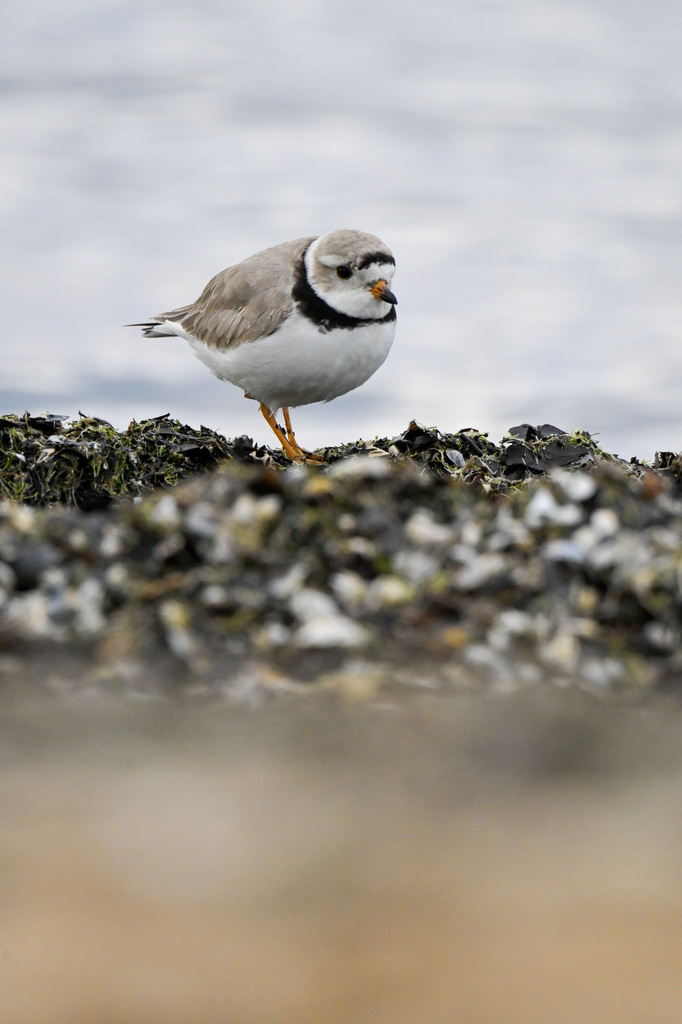
Piping Plover
Charadrius melodus
Birdstrong against fish, reptiles
Uncommon
Swoop
While active with another bird in play, it hits 6 harder on its first attack after entering play (12 with two others).
36

44
Piping Plover
Charadrius melodus
Birdstrong against fish, reptiles
Uncommon
While active with another bird in play, it hits 6 harder on its first attack after entering play (12 with two others).
Charadrius melodus
Photo: © Becca (original photo) · CC BY 4.0 (licence text) · cropped
Strong against: it deals 20% more damage to them. Weak against: these types deal 20% more damage to it.
The piping plover (Charadrius melodus) is a small, sand-colored shorebird that nests and feeds along coastal sand and gravel beaches in North America. The adult has yellow-orange-red legs, a black band across the forehead from eye to eye, and a black stripe running along the breast line. This chest band is usually thicker in males during the breeding season, and it is the only reliable way to tell the sexes apart. The bird is difficult to see when it is standing still, as it blends well with open, sandy beach habitats. It typically runs in short, quick spurts and then stops.
There are two subspecies of piping plovers: the eastern population is known as Charadrius melodus melodus and the mid-west population is known as C. m. circumcinctus. The bird's name is derived from its plaintive bell-like whistles which are often heard before the bird is visible.
In 1986, the U.S. Fish & Wildlife Service listed the Great Lakes population as endangered and the Northern Great Plains and Atlantic populations as threatened. Intensive conservation efforts have yielded slow population growth, but only some populations have met the recovery goals set for them. The growth trend is expected to reverse if conservation efforts were stopped. Total population was estimated to be between 7600 and 8400 individuals in 2020.
Abridged excerpt from the Wikipedia article Piping plover, by its authors, under the CC BY-SA 4.0 licence.
Near Threatened on the IUCN Red List: that’s what makes this card Uncommon.
Every Uncommon card has 115 points, shared between HP, ATK and DEF:
How they’re shared out:

 DEF 44