 …
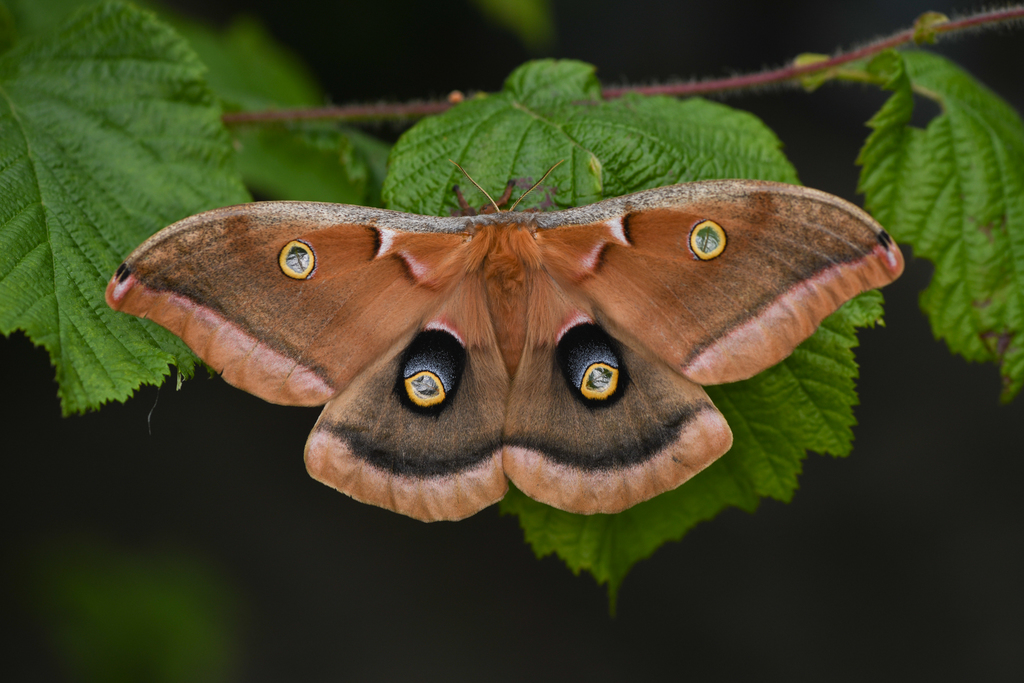
Polyphemus Moth
Antheraea polyphemus
Insectstrong against fungi, fish
Common
Swarm
While active with another insect in play, each of its attacks also hits the opposing bench for 10, without knocking them out (20 with two others).
43

34
Polyphemus Moth
Antheraea polyphemus
Insectstrong against fungi, fish
Common
While active with another insect in play, each of its attacks also hits the opposing bench for 10, without knocking them out (20 with two others).
Antheraea polyphemus
Photo: © Trevor Van Loon (original photo) · CC BY 4.0 (licence text) · cropped
Strong against: it deals 20% more damage to them. Weak against: these types deal 20% more damage to it.
Antheraea polyphemus, the Polyphemus moth, is a North American member of the family Saturniidae, the giant silk moths. It is a tan-colored moth, with an average wingspan of 15 cm (6 in). The most noticeable feature of the moth is the large, purplish eyespot on each hindwing; its name is from the Greek myth of the cyclops Polyphemus. The species, first described by Pieter Cramer in 1776, is widespread in continental North America, with local populations found throughout subarctic Canada and in all of the United States except Arizona and Nevada.
Polyphemus moths inhabit deciduous hardwood forests, orchards, urban areas, and wetlands. The caterpillar can eat a total of 86,000 times its weight in the first eight weeks after it emerges. Polyphemus moths are considered to be very polyphagous, meaning they eat from a wide variety of plants.
Excerpt from the Wikipedia article Antheraea polyphemus, by its authors, under the CC BY-SA 4.0 licence.
Least Concern on the IUCN Red List: that’s what makes this card Common.
Every Common card has 100 points, shared between HP, ATK and DEF:
How they’re shared out:

 DEF 34