 …
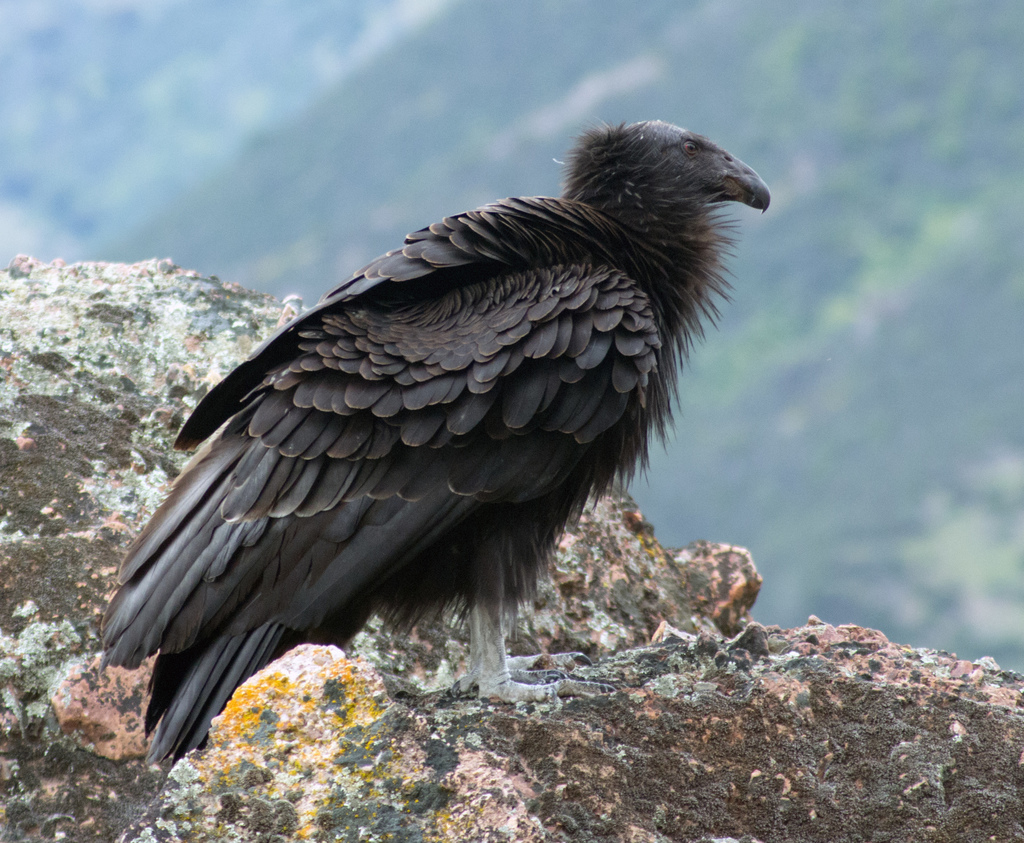
California Condor
Gymnogyps californianus
Birdstrong against fish, reptiles
Mythic
Leader · Swoop
Counts as two birds: while active, it hits 6 harder on its first attack after entering play (12 with another bird in play).
50

55
California Condor
Gymnogyps californianus
Birdstrong against fish, reptiles
Mythic
Counts as two birds: while active, it hits 6 harder on its first attack after entering play (12 with another bird in play).
Gymnogyps californianus
Photo: © Rick Mandel (original photo) · CC BY 4.0 (licence text) · cropped
Strong against: it deals 20% more damage to them. Weak against: these types deal 20% more damage to it.
The California condor (Gymnogyps californianus) is a New World vulture and the largest North American land bird. It became extinct in the wild in 1987 when all remaining wild individuals were captured, but has since been reintroduced to northern Arizona and southern Utah (including the Grand Canyon area and Zion National Park), the coastal mountains of California, and northern Baja California in Mexico. It is the only surviving member of the genus Gymnogyps, although four extinct members of the genus are also known. The species is listed by IUCN as critically endangered, and similarly considered Critically Imperiled by NatureServe.
The plumage is black with patches of white on the underside of the wings; the head is largely bald, with skin color ranging from gray on young birds to yellow and bright orange on breeding adults. Its 3.0 m (9.8 ft) wingspan is the widest of any North American bird, and its weight of up to 14 kg (31 lb) nearly equals that of the trumpeter swan, the heaviest among native North American bird species. The condor is a scavenger and eats large amounts of carrion. It is one of the world's longest-living birds, with a lifespan of up to 60 years.
Abridged excerpt from the Wikipedia article California condor, by its authors, under the CC BY-SA 4.0 licence.
Critically Endangered on the IUCN Red List: that’s what makes this card Mythic.
Every Mythic card has 160 points, shared between HP, ATK and DEF:
How they’re shared out:

 DEF 55