 …
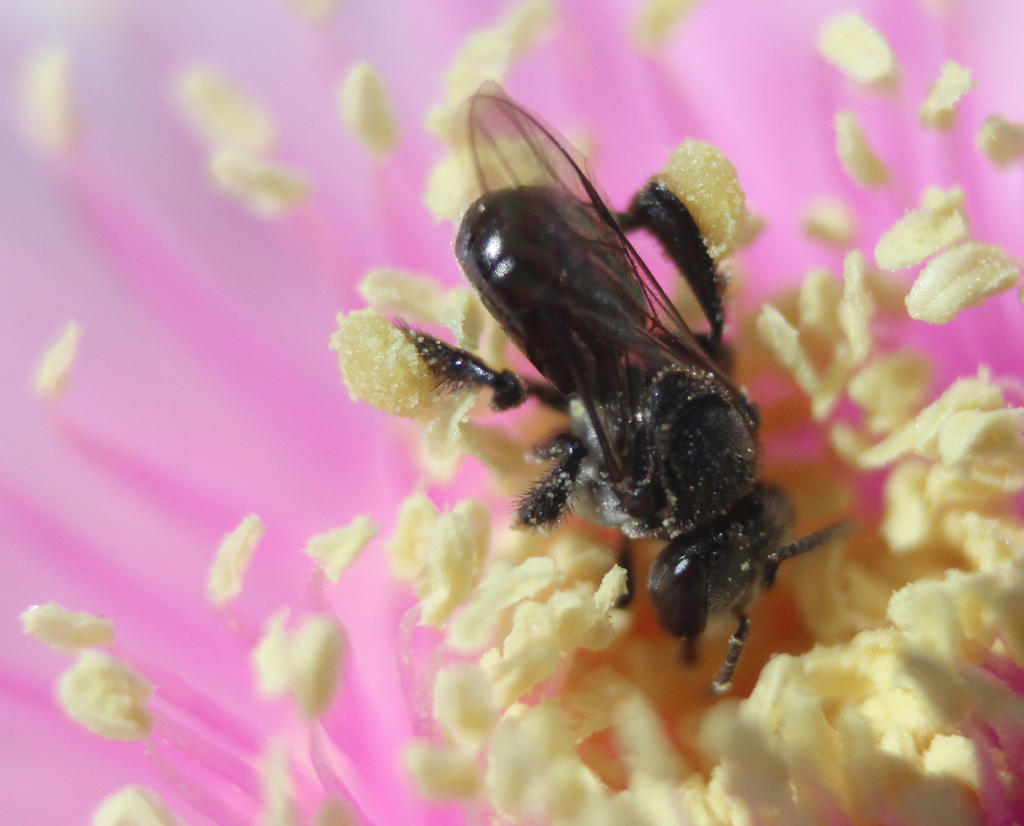
Charcoal Stingless Bee
Tetragonula carbonaria
Insectstrong against fungi, fish
Common
Swarm
While active with another insect in play, each of its attacks also hits the opposing bench for 10, without knocking them out (20 with two others).
38

40
Charcoal Stingless Bee
Tetragonula carbonaria
Insectstrong against fungi, fish
Common
While active with another insect in play, each of its attacks also hits the opposing bench for 10, without knocking them out (20 with two others).
Tetragonula carbonaria
Photo: © Graham Wise (original photo) · CC BY 4.0 (licence text) · cropped
Strong against: it deals 20% more damage to them. Weak against: these types deal 20% more damage to it.
Tetragonula carbonaria (previously known as Trigona carbonaria) is a stingless bee, endemic to the north-east coast of Australia. Its common name is sugarbag bee. They are also occasionally referred to as bush bees. The bee is known to pollinate orchid species, such as Dendrobium lichenastrum, D. toressae, and D. speciosum. It has been identified as an insect that collects pollen from the cycad Cycas media. They are also known for their small body size, reduced wing venation, and highly developed social structure comparable to honey bees.
Tetragonula carbonaria produce edible honey, which they store in pots in the nest made from propolis. These pots are referred to as sugarbags, giving the bees their common name of sugarbag bees. These pots and the whole nest are eaten by some Indigenous Australian communities as bush tucker. The bees themselves are also important cultural symbols for many Indigenous Australians.
Excerpt from the Wikipedia article Tetragonula carbonaria, by its authors, under the CC BY-SA 4.0 licence.
No global status on the IUCN Red List: that’s what makes this card Common.
Every Common card has 100 points, shared between HP, ATK and DEF:
How they’re shared out:

 DEF 40