 …
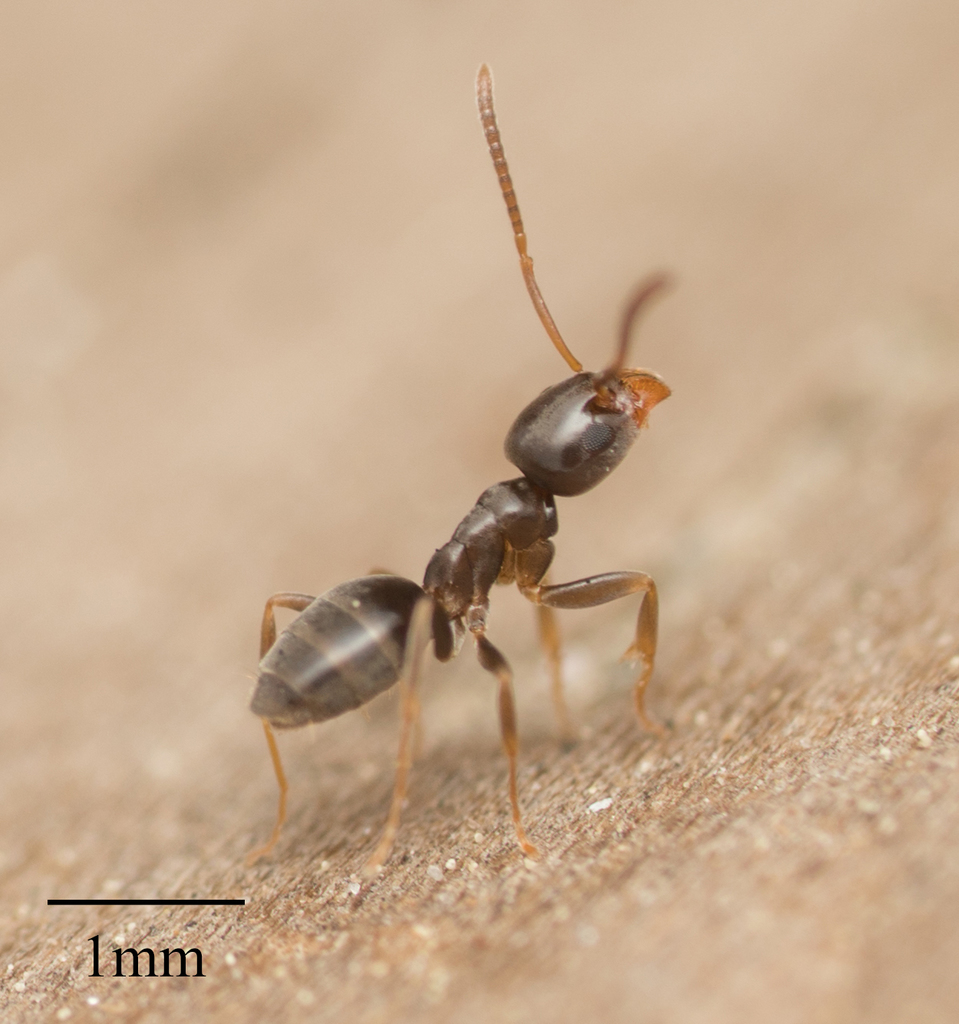
Odorous House Ant
Tapinoma sessile
Insectstrong against fungi, fish
Common
Swarm
While active with another insect in play, each of its attacks also hits the opposing bench for 10, without knocking them out (20 with two others).
32

37
Odorous House Ant
Tapinoma sessile
Insectstrong against fungi, fish
Common
While active with another insect in play, each of its attacks also hits the opposing bench for 10, without knocking them out (20 with two others).
Tapinoma sessile
Photo: Jesse Rorabaugh (original photo) · CC0 (licence text) · cropped
Strong against: it deals 20% more damage to them. Weak against: these types deal 20% more damage to it.
Tapinoma sessile is a species of small ant that goes by the common names odorous house ant, sugar ant, stink ant, and coconut ant. Their colonies are polydomous (consisting of multiple nests) and polygynous (containing multiple reproducing queens). Like many social insects, T. sessile employs complex foraging strategies, allocates food depending on environmental conditions, and engages in competition with other insects.
T. sessile can be found in a huge diversity of habitats, including within houses. They forage mainly for honeydew, which is produced by aphids and scale insects that are guarded and tended by the ants, as well as floral nectar and other sugary foods. They are common household pests and are attracted to sources of water and sweets.
Tapinoma sessile have long been suspected of exhibiting cloning behaviors similar to those observed in black crazy ants. This hypothesis has recently been confirmed through experimental evidence.
In a notable experiment conducted by Marcello Ponzo, a colony consisting of seven queens and approximately 3,000 to 4,000 workers was kept in a controlled outworld and nest environment after being captured from the wild. Within a period of almost two months, the colony increased its number of queens from seven to ten under optimal conditions and a nutritious diet. This observation provides strong evidence supporting the theory of cloning in Tapinoma sessile.
Abridged excerpt from the Wikipedia article Tapinoma sessile, by its authors, under the CC BY-SA 4.0 licence.
No global status on the IUCN Red List: that’s what makes this card Common.
Every Common card has 100 points, shared between HP, ATK and DEF:
How they’re shared out:

 DEF 37