 …
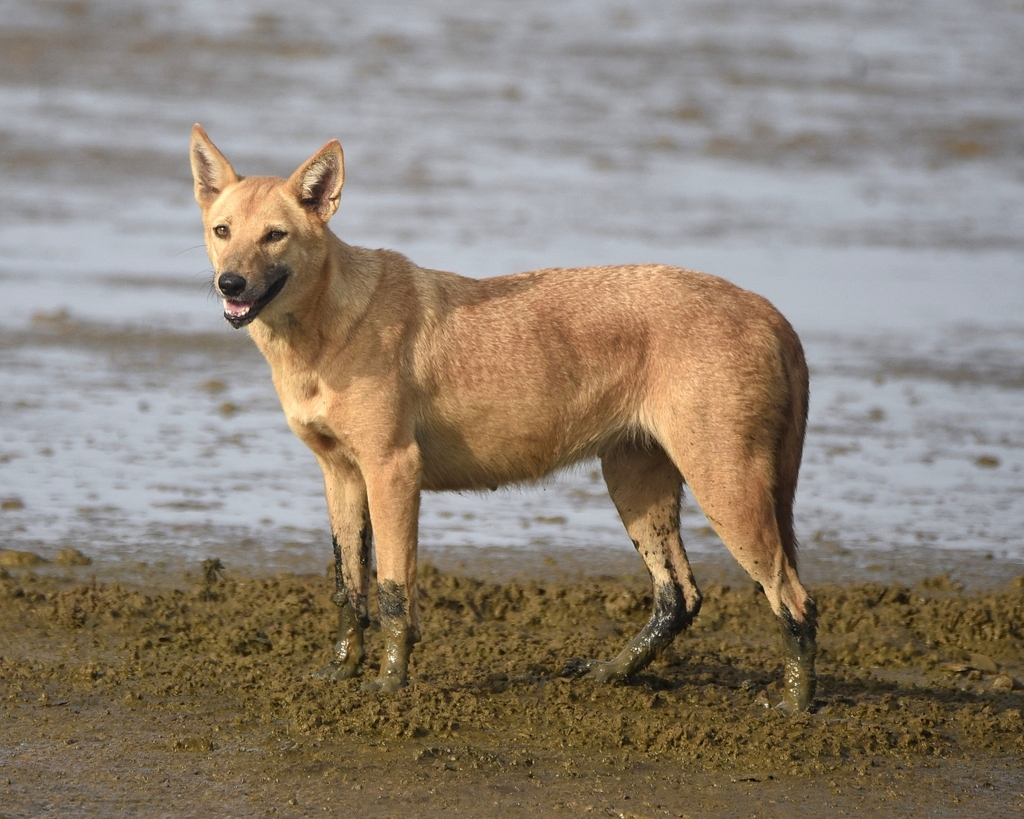
Domestic Dog
Canis familiaris
Mammalstrong against birds, fungi
Common
Pack
While active with another mammal in play, it hits 7 harder (14 with two others).
32

28
Domestic Dog
Canis familiaris
Mammalstrong against birds, fungi
Common
While active with another mammal in play, it hits 7 harder (14 with two others).
Canis familiaris
Photo: © Afsar Nayakkan (original photo) · CC BY 4.0 (licence text) · cropped
Strong against: it deals 20% more damage to them. Weak against: these types deal 20% more damage to it.
The dog (Canis familiaris or Canis lupus familiaris) is a domesticated descendant of wolves. Also called the domestic dog, it was selectively bred during the Late Pleistocene by hunter-gatherers. Dogs and the modern gray wolf share a common ancestor. Dogs were the first species to be domesticated over 14,000 years ago, before the development of agriculture, though genetic studies suggest the domestication process may have begun over 25,000 years ago. Due to their long association with humans, dogs have gained the ability to thrive on a starch-rich diet that would be inadequate for other canids.
Dogs have been bred for specific behaviors, sensory abilities, and physical traits. Dog breeds vary widely in shape, size, and color. All dogs have a similar number of bones, although the number can vary with tail length. They also have powerful jaws containing about 42 teeth, and well-developed senses of smell, hearing, and sight. Compared to humans, dogs have a superior sense of smell and hearing, but less acute vision. Dogs serve humans in many ways, including hunting, herding, pulling loads, providing protection and companionship, offering therapeutic support, assisting people with disabilities, and supporting police and military operations.
Abridged excerpt from the Wikipedia article Dog, by its authors, under the CC BY-SA 4.0 licence.
No global status on the IUCN Red List: that’s what makes this card Common.
Every Common card has 100 points, shared between HP, ATK and DEF:
How they’re shared out:

 DEF 28