 …
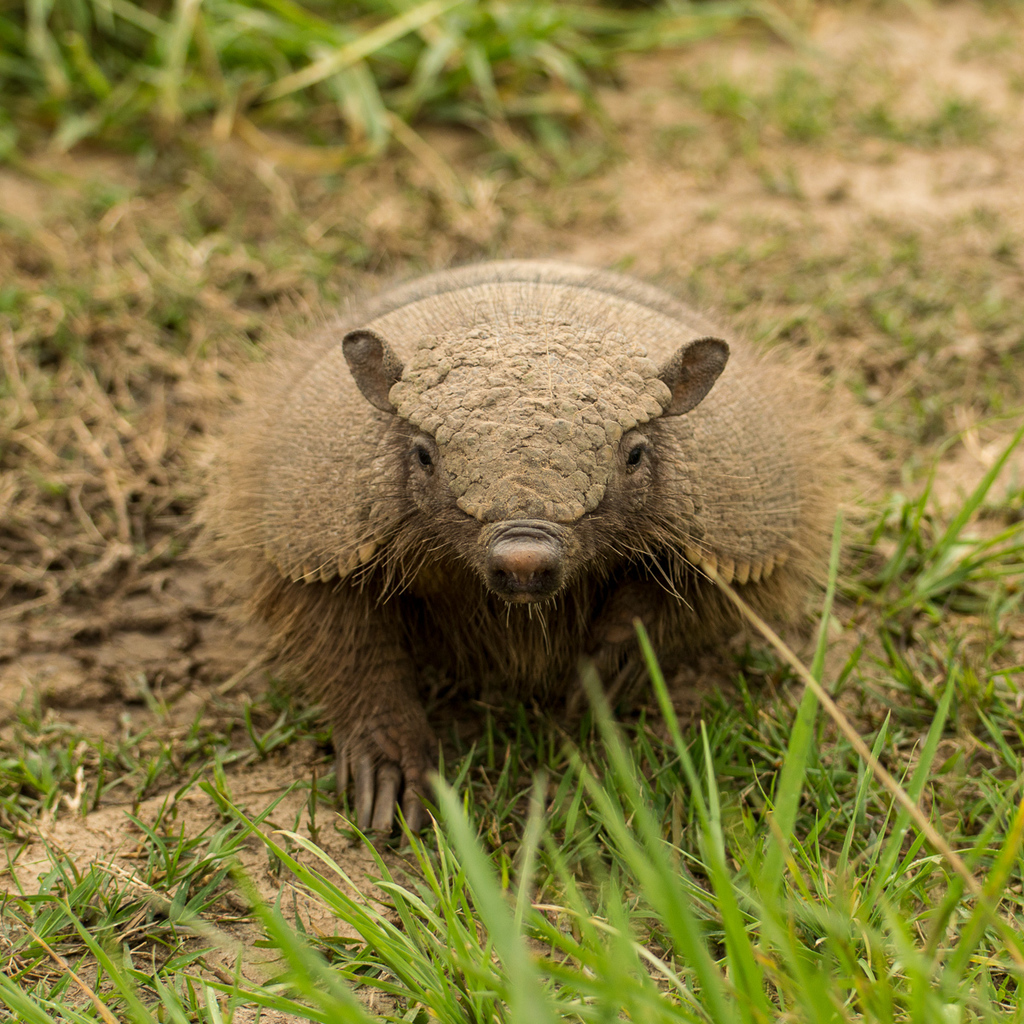
Large Hairy Armadillo
Chaetophractus villosus
Mammalstrong against birds, fungi
Common
Pack
While active with another mammal in play, it hits 7 harder (14 with two others).
30

33
Large Hairy Armadillo
Chaetophractus villosus
Mammalstrong against birds, fungi
Common
While active with another mammal in play, it hits 7 harder (14 with two others).
Chaetophractus villosus
Photo: © Facundo Chieffo (original photo) · CC BY 4.0 (licence text) · cropped
Strong against: it deals 20% more damage to them. Weak against: these types deal 20% more damage to it.
The big (or large) hairy armadillo (Chaetophractus villosus) is one of the largest and most numerous armadillos in South America. It lives from sea level to altitudes of up to 1,300 meters across the southern portion of South America, and can be found in grasslands, forests, and savannahs, and has even started claiming agricultural areas as its home. It is an accomplished digger and spends most of its time below ground. It makes both temporary and long-term burrows, depending on its food source. In Spanish it is colloquially known as peludo.
Armadillos are protected from predators by a series of thin, bony plates along the head and back. They reach sexual maturity at around 9 months and have been known to live over 30 years in captivity. Though this animal is routinely harvested for its meat and its shell, or simply killed by farmers, it has shown resiliency, and populations seem to be handling this exploitation well. Currently, no protective practices are in place for this armadillo, but it does live in many protected areas. This species of armadillo is a preferred research animal due to its adaptability to laboratory settings, and relative hardiness in situations of stress.
Excerpt from the Wikipedia article Big hairy armadillo, by its authors, under the CC BY-SA 4.0 licence.
Least Concern on the IUCN Red List: that’s what makes this card Common.
Every Common card has 100 points, shared between HP, ATK and DEF:
How they’re shared out:

 DEF 33