 …
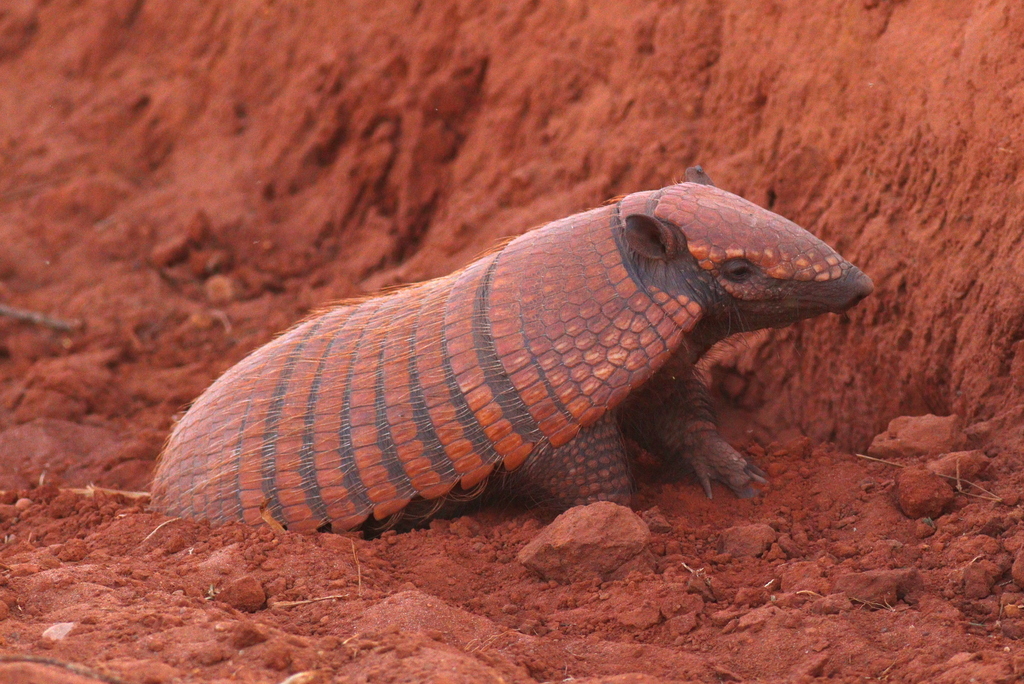
Six-banded Armadillo
Euphractus sexcinctus
Mammalstrong against birds, fungi
Common
Pack
While active with another mammal in play, it hits 7 harder (14 with two others).
41

33
Six-banded Armadillo
Euphractus sexcinctus
Mammalstrong against birds, fungi
Common
While active with another mammal in play, it hits 7 harder (14 with two others).
Euphractus sexcinctus
Photo: © Jan Ebr & Ivana Ebrová (original photo) · CC BY 4.0 (licence text) · cropped
Strong against: it deals 20% more damage to them. Weak against: these types deal 20% more damage to it.
The six-banded armadillo (Euphractus sexcinctus), also known as the yellow armadillo, is an armadillo found in South America. The sole extant member of its genus, it was first described by Swedish zoologist Carl Linnaeus in 1758. The six-banded armadillo is typically between 40 and 50 centimeters (16 and 20 in) in head-and-body length, and weighs 3.2 to 6.5 kilograms (7.1 to 14.3 lb). The carapace (hard shell on the back) is pale yellow to reddish brown, marked by scales of equal length, and scantily covered by buff to white bristle-like hairs. The forefeet have five distinct toes, each with moderately developed claws.
Abridged excerpt from the Wikipedia article Six-banded armadillo, by its authors, under the CC BY-SA 4.0 licence.
Least Concern on the IUCN Red List: that’s what makes this card Common.
Every Common card has 100 points, shared between HP, ATK and DEF:
How they’re shared out:

 DEF 33