 …
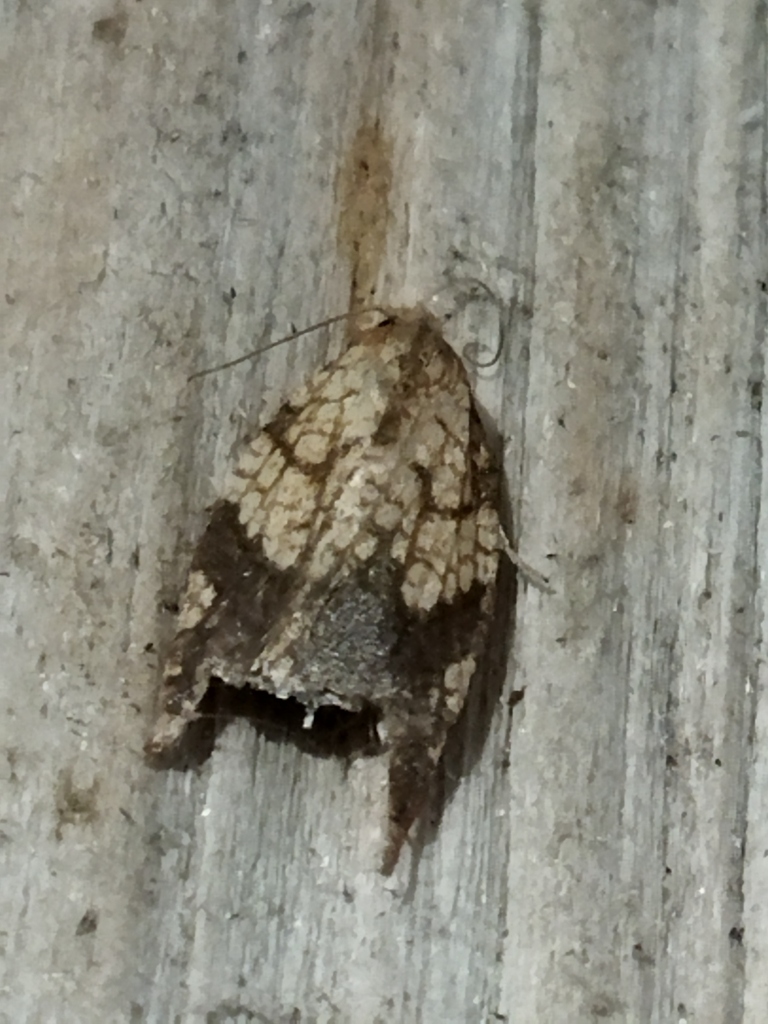
Rhomboid Tortrix
Acleris rhombana
Insectstrong against fungi, fish
Common
Swarm
While active with another insect in play, each of its attacks also hits the opposing bench for 10, without knocking them out (20 with two others).
38

40
Rhomboid Tortrix
Acleris rhombana
Insectstrong against fungi, fish
Common
While active with another insect in play, each of its attacks also hits the opposing bench for 10, without knocking them out (20 with two others).
Acleris rhombana
Photo: © SteveM4560 (original photo) · CC BY 4.0 (licence text) · cropped
Strong against: it deals 20% more damage to them. Weak against: these types deal 20% more damage to it.
Acleris rhombana, the rhomboid tortrix, is a moth of the family Tortricidae. It is found in the Palearctic realm, from Europe to the Caucasus, Armenia, and Turkmenistan.
The wingspan is 14–18 mm. The forewings are suboblong, apex rather strongly prominent, whitish-ochreous to reddish-ochreous, sometimes much mixed with fuscous, strigulated with dark fuscous or ferruginous. The veins are dark fuscous and the tufts very slight. The edge of the basal patch is usually dark fuscous and the angulated central fascia and costal patch are often rather dark fuscous, sometimes united in the disc. The apical half of cilia is white on upper part of the termen. The hindwings are grey-whitish, indistinctly strigulated with grey. The larva is pale green-yellowish; head pale brown; anal plate green.
Julius von Kennel provides a full description.
The moths are on wing from June to November depending on the location.
The larvae feed on various trees and shrubs, including Crataegus, Malus, Pyrus, Prunus and Rosaceae species.
Excerpt from the Wikipedia article Acleris rhombana, by its authors, under the CC BY-SA 4.0 licence.
No global status on the IUCN Red List: that’s what makes this card Common.
Every Common card has 100 points, shared between HP, ATK and DEF:
How they’re shared out:

 DEF 40