 …
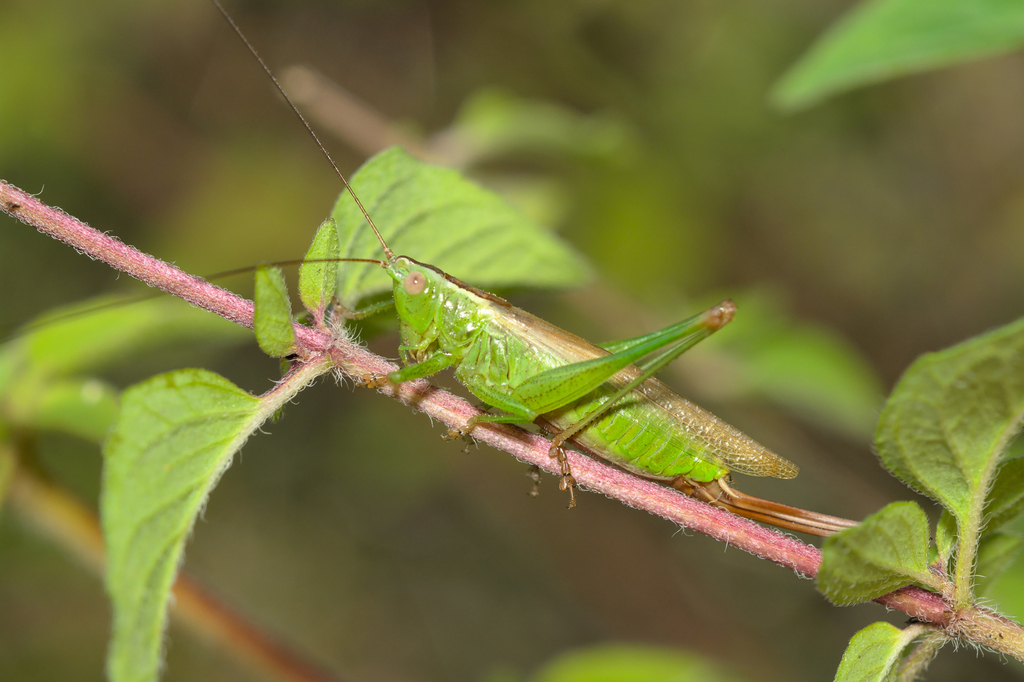
Long-winged Conehead
Conocephalus fuscus
Insectstrong against fungi, fish
Common
Swarm
While active with another insect in play, each of its attacks also hits the opposing bench for 10, without knocking them out (20 with two others).
30

36
Long-winged Conehead
Conocephalus fuscus
Insectstrong against fungi, fish
Common
While active with another insect in play, each of its attacks also hits the opposing bench for 10, without knocking them out (20 with two others).
Conocephalus fuscus
Photo: © Gilles San Martin (original photo) · CC BY-SA 4.0 (licence text) · cropped
Strong against: it deals 20% more damage to them. Weak against: these types deal 20% more damage to it.
Conocephalus fuscus, the long-winged conehead, is a member of the family Tettigoniidae, the bush-crickets and is distributed through much of Europe and temperate Asia. This bush-cricket is native to the British Isles where it may confused with the short-winged conehead (Conocephalus dorsalis). These two species are phenotypically similar; however, the distinguishing factor between the two is the fully developed set of wings the long-winged conehead possesses that allows for flight. In the short-winged coneheads the hind wings are shorter than the abdomen, causing the wings to be vestigial and the species is incapable of flight. For this reason it is hard to discriminate between the two species during the early stages of their life cycle before the wings have fully developed. The colouration of the conehead is typically a grass green with a distinctive brown stripe down its back, though there are some brown phenotypes.
Excerpt from the Wikipedia article Conocephalus fuscus, by its authors, under the CC BY-SA 4.0 licence.
No global status on the IUCN Red List: that’s what makes this card Common.
Every Common card has 100 points, shared between HP, ATK and DEF:
How they’re shared out:

 DEF 36