 …
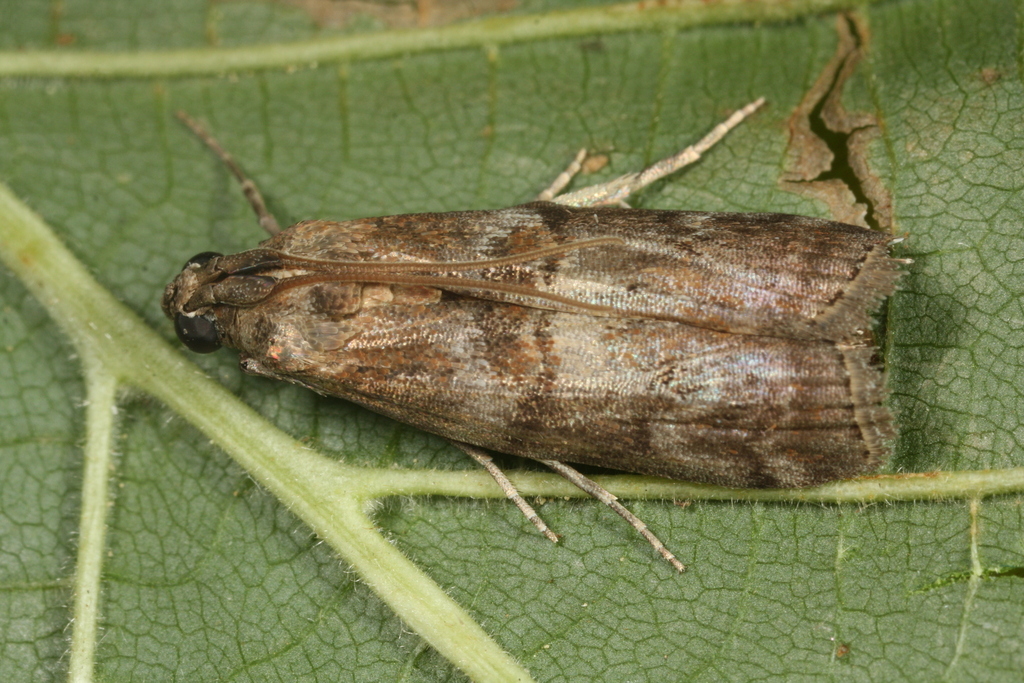
Dotted Oak Knot-horn
Phycita roborella
Insectstrong against fungi, fish
Common
Swarm
While active with another insect in play, each of its attacks also hits the opposing bench for 10, without knocking them out (20 with two others).
38

40
Dotted Oak Knot-horn
Phycita roborella
Insectstrong against fungi, fish
Common
While active with another insect in play, each of its attacks also hits the opposing bench for 10, without knocking them out (20 with two others).
Phycita roborella
Photo: © ingridaltmann (original photo) · CC BY 4.0 (licence text) · cropped
Strong against: it deals 20% more damage to them. Weak against: these types deal 20% more damage to it.
Phycita roborella is a moth of the family Pyralidae. It is – under its junior synonym Tinea spissicella – the type species of its genus Phycita, and by extension of the subfamily Phycitinae.
It is found in Europe. The wingspan is 24–29 mm.The forewings are fuscous, mixed or tinged with reddish and sprinkled with grey whitish, more whitish-suffused towards dorsum between lines;
an erect triangular reddish-brown blackish-mixed patch from dorsum before first line, often preceded by a whitish shade; first and second lines pale, internally darker-edged; a curved darker transverse discal mark; some short black dashes on veins near before second line. Hindwings fuscous.The larva is brown-reddish, yellowish-freckled; subdorsal and lateral lines darker; head reddish-brown; 2 black-spotted; a white black ringed lateral spot on 3: amongst spun leaves of oak.
The moth flies in one generation from the end of June to September.
The caterpillars feed on oak, apple and pear.
Excerpt from the Wikipedia article Phycita roborella, by its authors, under the CC BY-SA 4.0 licence.
No global status on the IUCN Red List: that’s what makes this card Common.
Every Common card has 100 points, shared between HP, ATK and DEF:
How they’re shared out:

 DEF 40