 …
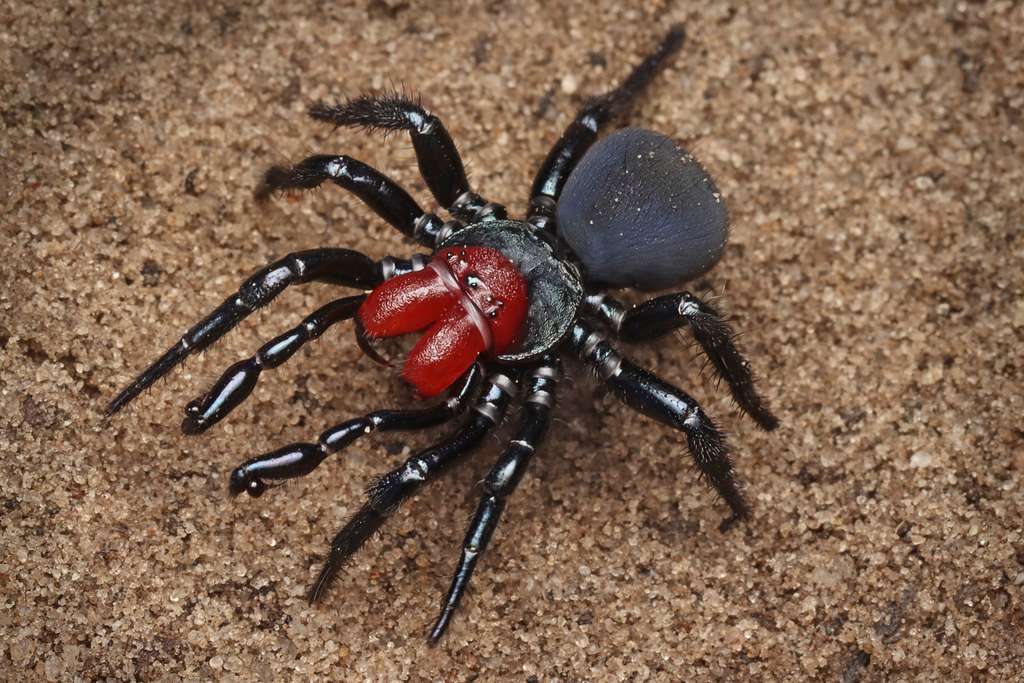
Red-headed Mouse Spider
Missulena occatoria
Arachnidstrong against insects, birds
Common
Venom
While active with another arachnid in play, its target loses 4 HP at the start of each of its turns, as long as it stays active (7 with two others).
39

29
Red-headed Mouse Spider
Missulena occatoria
Arachnidstrong against insects, birds
Common
While active with another arachnid in play, its target loses 4 HP at the start of each of its turns, as long as it stays active (7 with two others).
Missulena occatoria
Photo: Connor Margetts (original photo) · CC0 (licence text) · cropped
Strong against: it deals 20% more damage to them. Weak against: these types deal 20% more damage to it.
Missulena occatoria, known as the red-headed mouse spider, is a species of spider found in Australia, from open forest to desert shrubland. It is the most widely distributed Missulena species, occurring throughout mainland Australia (but mainly west of the Great Dividing Range). This is possible because the spiderlings disperse via wind (ballooning). Normally this only occurs with araneomorph spiders, mygalomorph spiders normally disperse by walking. Missulena venom may be very toxic, but few cases of serious envenomation have been recorded. Most recorded bites only caused minor effects, with Australian funnel-web spider antivenom having proved effective as a treatment.
The spiders dig a burrow up to 55 cm deep, with two trapdoors.
Females are approximately 35 mm long, stout, short-legged, and mostly dark brown to black (but the jaws are sometimes red-tinged). The smaller males are approximately 15 mm long, have longer and thinner legs, and the head and jaws are bright red while the abdomen is gunmetal blue to black.
Excerpt from the Wikipedia article Missulena occatoria, by its authors, under the CC BY-SA 4.0 licence.
No global status on the IUCN Red List: that’s what makes this card Common.
Every Common card has 100 points, shared between HP, ATK and DEF:
How they’re shared out:

 DEF 29