 …
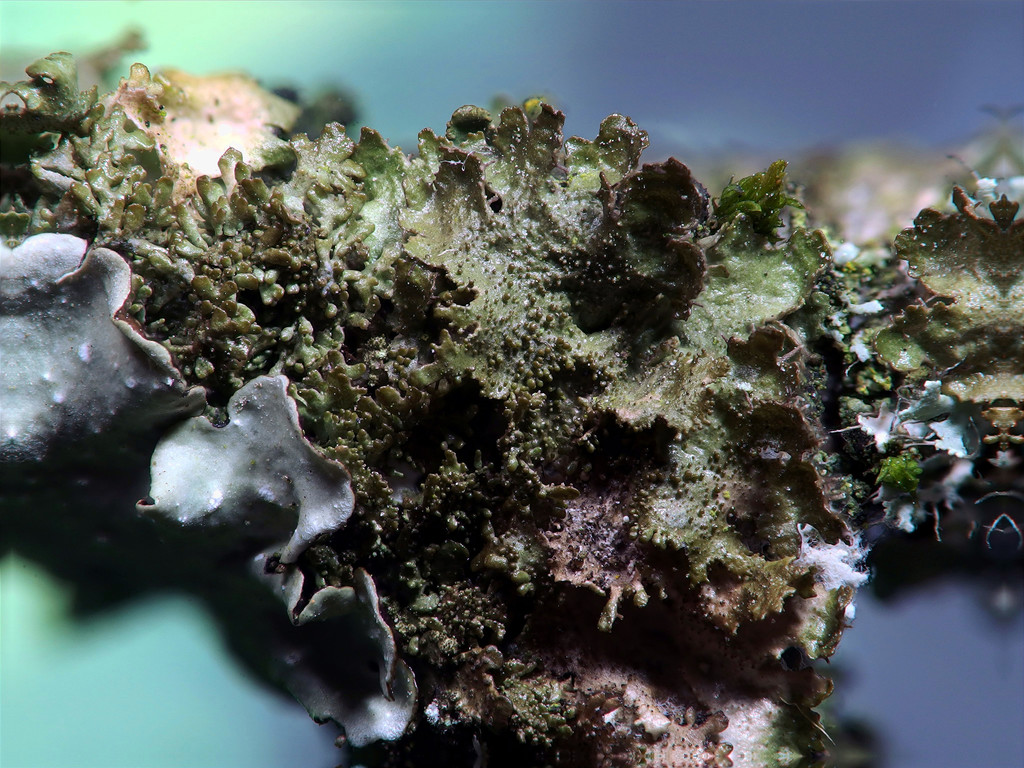
Lustrous Camouflage Lichen
Melanohalea exasperatula
Fungusstrong against amphibians, reptiles
Common
Mycelium
While active with another fungus in play, it regains 5 HP at the start of your turn (8 with two others).
38

29
Lustrous Camouflage Lichen
Melanohalea exasperatula
Fungusstrong against amphibians, reptiles
Common
While active with another fungus in play, it regains 5 HP at the start of your turn (8 with two others).
Melanohalea exasperatula
Photo: © armand_39 (original photo) · CC BY 4.0 (licence text) · cropped
Strong against: it deals 20% more damage to them. Weak against: these types deal 20% more damage to it.
Melanohalea exasperatula, commonly known as the lustrous camouflage lichen or lustrous brown-shield, is a species of corticolous (bark-dwelling) foliose lichen in the family Parmeliaceae. It has a widespread global distribution and is common in both Europe and northern North America. Its thallus can grow up to 5 cm (2 in) in diameter, with marginal lobes up to 5 mm (3⁄16 in) broad. The upper surface is pale olive-green to red-brown, with isidia (propagules of vegetative reproduction) that are unbranched, inflated, and hollow. It can be distinguished from similar species by the shape and structure of these isidia. The lower surface of the thallus is pale tan to pale brown with scattered, pale rhizines. Apothecia (sexual fruiting bodies) are uncommon, while pycnidia (asexual fruiting bodies) and secondary metabolites are not found in this species. The lack of defensive chemicals makes it vulnerable to grazing by slugs and snails. The evolutionary history of M. exasperatula is linked to major climatic events during the Miocene and Pliocene epochs.
Excerpt from the Wikipedia article Melanohalea exasperatula, by its authors, under the CC BY-SA 4.0 licence.
No global status on the IUCN Red List: that’s what makes this card Common.
Every Common card has 100 points, shared between HP, ATK and DEF:
How they’re shared out:

 DEF 29