 …
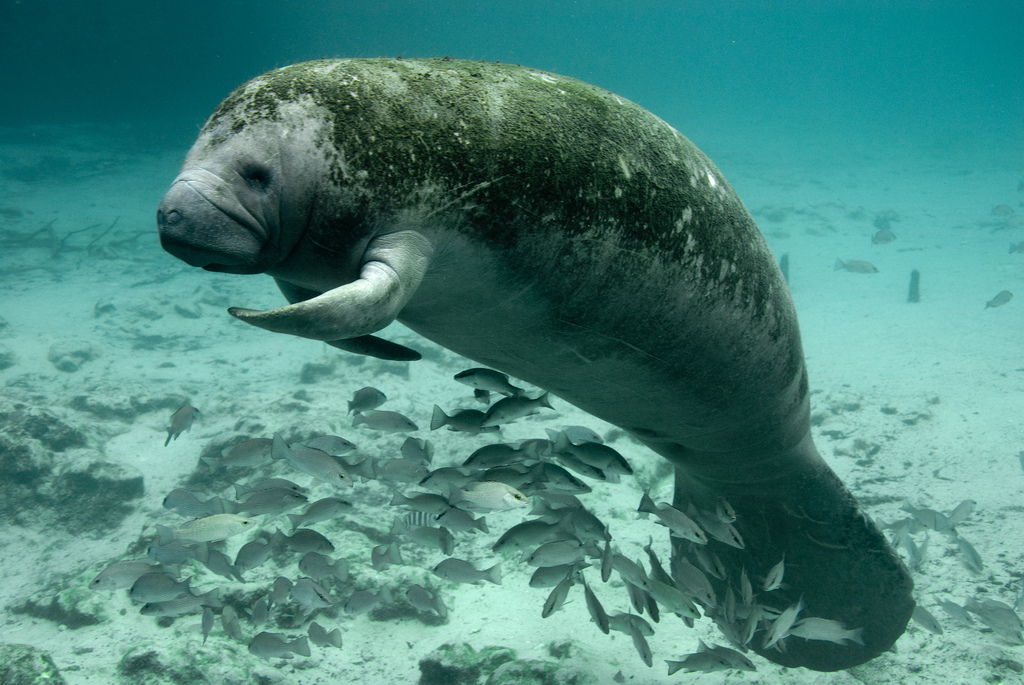
West Indian Manatee
Trichechus manatus
Mammalstrong against birds, fungi
Rare
Pack
While active with another mammal in play, it hits 7 harder (14 with two others).
45

36
West Indian Manatee
Trichechus manatus
Mammalstrong against birds, fungi
Rare
While active with another mammal in play, it hits 7 harder (14 with two others).
Trichechus manatus
Photo: © U.S. Fish and Wildlife Service Headquarters (original photo) · CC BY 4.0 (licence text) · cropped
Strong against: it deals 20% more damage to them. Weak against: these types deal 20% more damage to it.
The West Indian manatee (Trichechus manatus), also known as the North American manatee, is a large, aquatic mammal native to warm coastal areas of the Caribbean, from the Eastern United States to northern Brazil. Living alone or in herds, it feeds on underwater plants and uses its whiskers to navigate. It is divided into two subspecies, the Florida manatee (T. m. latirostris) in the United States and the Antillean manatee (T. m. manatus) in the Caribbean, of which the Florida manatee is classified as threatened and the Antillean manatee is classified as endangered; both face pressure from habitat loss, pollution, and other human activity. The West Indian manatee is the largest living member of the sirenians (order Sirenia), a group of large aquatic mammals that includes the dugong, other manatees, and the extinct Steller's sea cow.
Manatees are herbivores, have developed vocal communication abilities, and are covered in highly sensitive whiskers (called vibrissae) that are used for feeding and navigation. In breeding season, several males form mating herds around an individual female; on average, one calf is born to a female manatee every two to three years.
Abridged excerpt from the Wikipedia article West Indian manatee, by its authors, under the CC BY-SA 4.0 licence.
Vulnerable on the IUCN Red List: that’s what makes this card Rare.
Every Rare card has 130 points, shared between HP, ATK and DEF:
How they’re shared out:

 DEF 36