 …
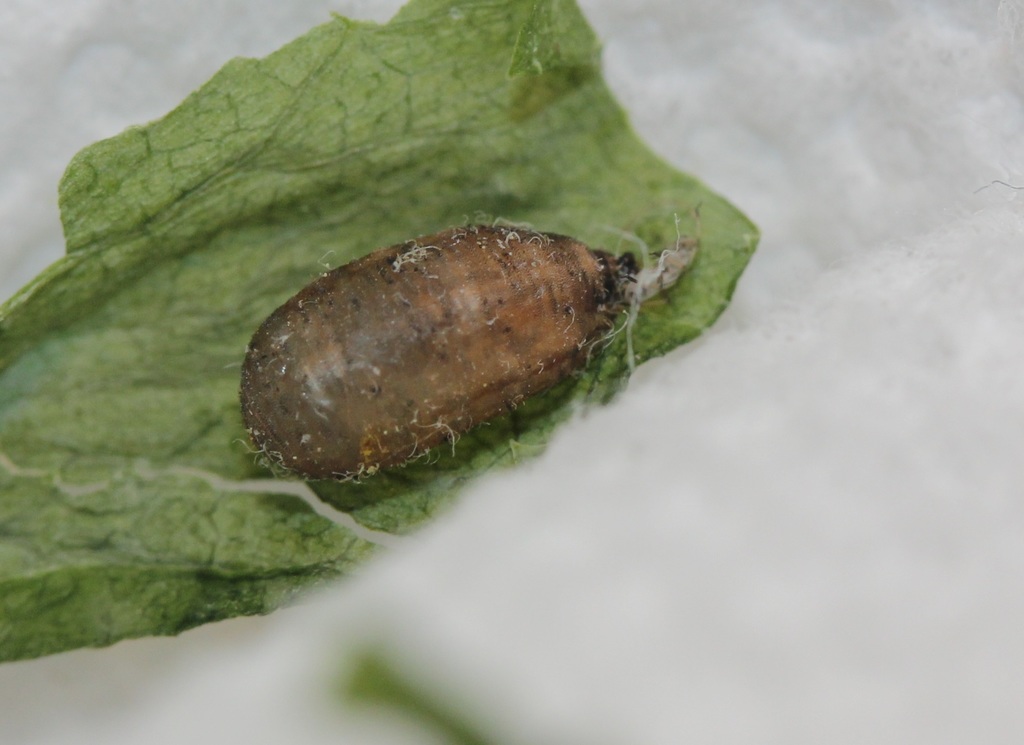
Long-tailed Aphideater
Eupeodes americanus
Insectstrong against fungi, fish
Common
Swarm
While active with another insect in play, each of its attacks also hits the opposing bench for 10, without knocking them out (20 with two others).
40

39
Long-tailed Aphideater
Eupeodes americanus
Insectstrong against fungi, fish
Common
While active with another insect in play, each of its attacks also hits the opposing bench for 10, without knocking them out (20 with two others).
Eupeodes americanus
Photo: © Even Dankowicz (original photo) · CC BY 4.0 (licence text) · cropped
Strong against: it deals 20% more damage to them. Weak against: these types deal 20% more damage to it.
Eupeodes americanus, the American hoverfly, is found throughout North America and inhabits meadows, and fields with flowers and foliage. Adults feed on nectar, whereas their larvae feed on aphids. The adult fly is black to metallic green, and has three yellow bands on its abdomen. Its face is a light yellow with large black compound eyes on either side, and its wings are clear; it is 9–12 mm in body length. The larvae are mature at around 11 mm, and they are yellow-white to salmon brown, with markings of black and white or yellow-white. The lighter markings consist of a transverse rectangular bars on segments 6 to 11, and a narrow line along each side of the larvae. Early instars have visible black setae. The larvae are active feeders. They are being considered as suitable biological control agents for aphids and scale insects. This species is considered highly migratory, moving from Canada to the southeastern United States during autumn
Excerpt from the Wikipedia article Eupeodes americanus, by its authors, under the CC BY-SA 4.0 licence.
No global status on the IUCN Red List: that’s what makes this card Common.
Every Common card has 100 points, shared between HP, ATK and DEF:
How they’re shared out:

 DEF 39