 …
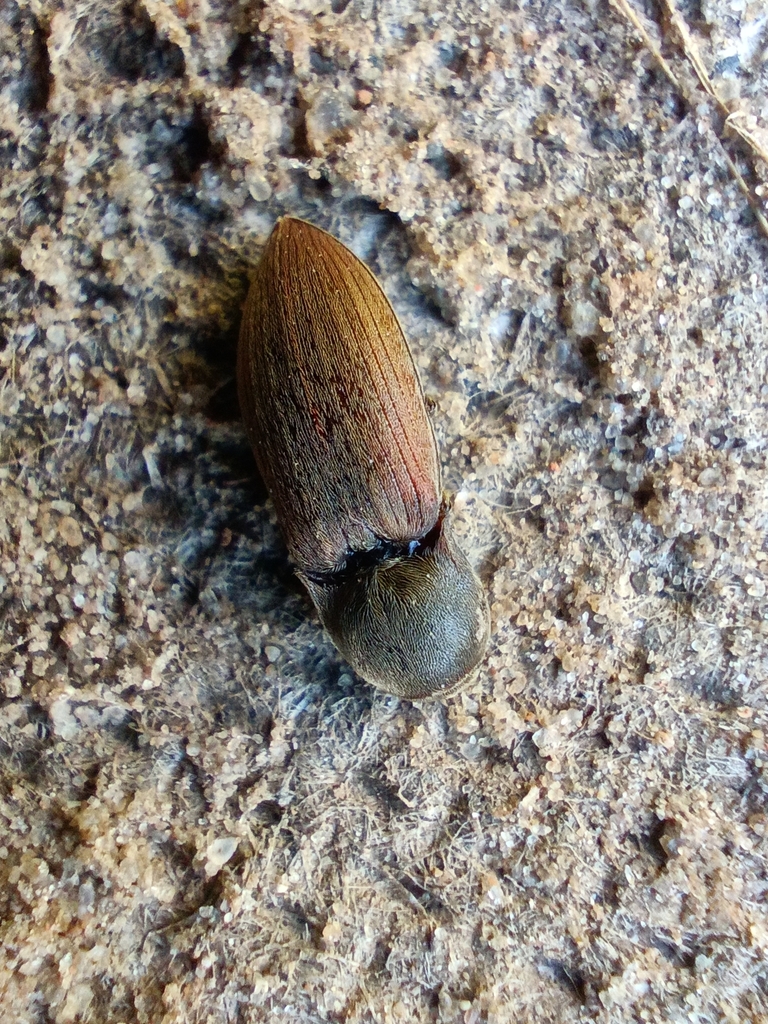
Dusky Wireworm
Agriotes obscurus
Insectstrong against fungi, fish
Common
Swarm
While active with another insect in play, each of its attacks also hits the opposing bench for 10, without knocking them out (20 with two others).
38

39
Dusky Wireworm
Agriotes obscurus
Insectstrong against fungi, fish
Common
While active with another insect in play, each of its attacks also hits the opposing bench for 10, without knocking them out (20 with two others).
Agriotes obscurus
Photo: © Михаил Языков (original photo) · CC BY 4.0 (licence text) · cropped
Strong against: it deals 20% more damage to them. Weak against: these types deal 20% more damage to it.
Agriotes obscurus, commonly known as dusky wireworm or obscure click beetle, is a species from the family Elateridae that is native and widely distributed in central and northern Europe. It is also present in parts of northern Asia and has been accidentally introduced into western Canada around 1900. It is now established in British Columbia (Canada) and Washington State (U.S.A.), with the risk of spreading to other parts of North America. The larvae (wireworms) are agricultural pests and attack the tubers, seeds and roots of numerous crops like potatoes, beets, cereals, sunflower, vegetables and ornamentals. The larvae also feed on the roots of some grasses and various other plants. For example, in Austria A. obscurus larvae often feed on the roots of common yarrow (Achillea millefolium). For minimizing the harmful effects of pesticides on the environment, an integrated approach is recommended for managing A. obscurus in agricultural fields. Primarily, this involves monitoring the pest populations with pheromone or larval traps. If damaging numbers are detected, non-pesticide management measures should be preferred like crop rotation or timing tillage and irrigation in a way so that the eggs and young larvae are desiccated in the top layer of the soil. The adult beetles are dark brown to black and about 8-10 mm long. They can be distinguished from other species of Agriotes by the morphology of the pronotum, the longitudinal ridges on the elytra and their coloration.
Abridged excerpt from the Wikipedia article Agriotes obscurus, by its authors, under the CC BY-SA 4.0 licence.
No global status on the IUCN Red List: that’s what makes this card Common.
Every Common card has 100 points, shared between HP, ATK and DEF:
How they’re shared out:

 DEF 39