 …
oak-loving bolete
Xerocomellus dryophilus
Fungusstrong against amphibians, reptiles
Common
Mycelium
While active with another fungus in play, it regains 5 HP at the start of your turn (8 with two others).
39

29
oak-loving bolete
Xerocomellus dryophilus
Fungusstrong against amphibians, reptiles
Common
While active with another fungus in play, it regains 5 HP at the start of your turn (8 with two others).
Xerocomellus dryophilus
Photo: © Adam J. Searcy (original photo) · CC BY 4.0 (licence text) · cropped
Strong against: it deals 20% more damage to them. Weak against: these types deal 20% more damage to it.
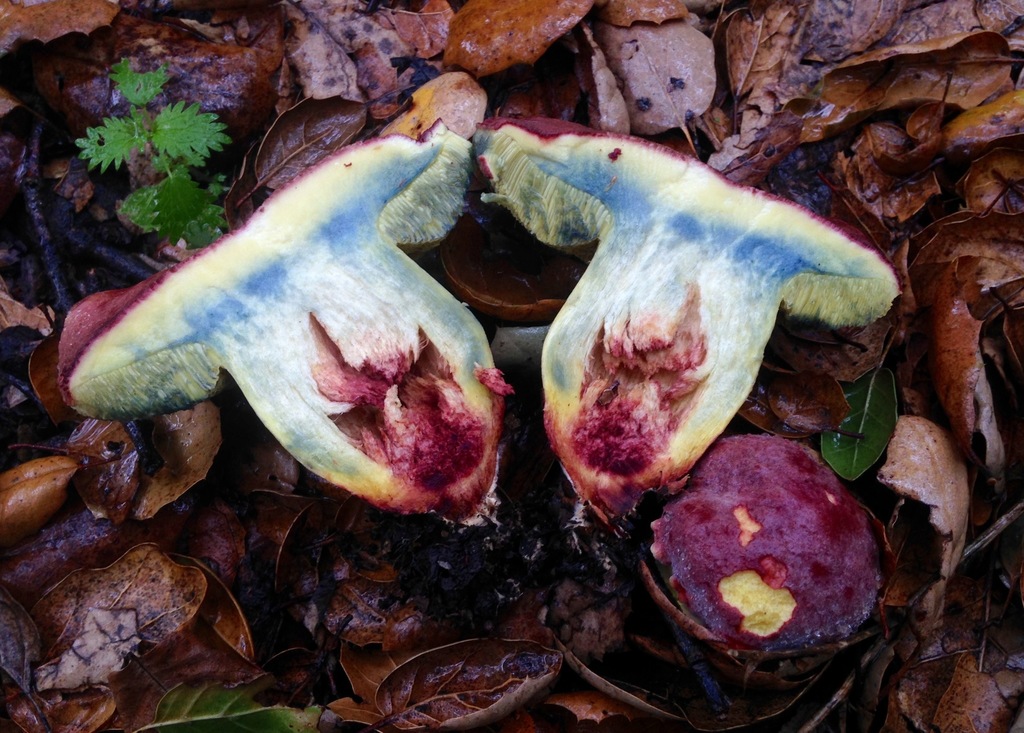
Xerocomellus dryophilus, commonly known as the oak-loving bolete and formerly known as Boletus dryophilus or Xerocomus dryophilus, is a basidiomycete fungus in the family Boletaceae. It was transferred to the new genus Xerocomellus in 2014. Its epithet had been previously applied to a European species, now described as Xerocomellus redeuilhii.
The reddish cap is up to 10 centimetres (4 in) wide and convex to plane. The pores are yellowish and often bruise blue, as does the flesh. The spore print is brown. The stem is up to 12 cm long, yellow at the top and reddish below. It is similar to X. chrysenteron and Boletus smithii.
The species appears to only occur under Quercus agrifolia (coast live oak) and is only found in California, where it is one of the most common boletes in the Los Angeles and San Diego counties. It is commonly parasitized by Hypomyces chrysospermus. It is edible but may be mediocre.
Excerpt from the Wikipedia article Xerocomellus dryophilus, by its authors, under the CC BY-SA 4.0 licence.
No global status on the IUCN Red List: that’s what makes this card Common.
Every Common card has 100 points, shared between HP, ATK and DEF:
How they’re shared out:

 DEF 29