 …
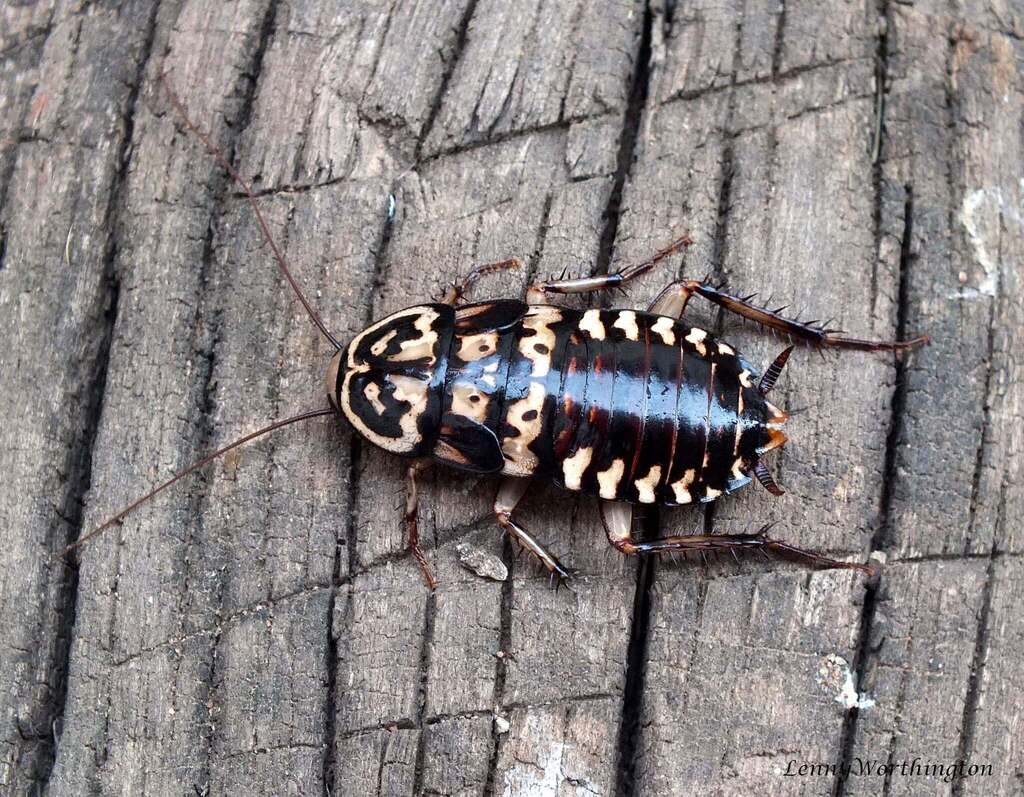
Harlequin Cockroach
Neostylopyga rhombifolia
Insectstrong against fungi, fish
Common
Swarm
While active with another insect in play, each of its attacks also hits the opposing bench for 10, without knocking them out (20 with two others).
30

37
Harlequin Cockroach
Neostylopyga rhombifolia
Insectstrong against fungi, fish
Common
While active with another insect in play, each of its attacks also hits the opposing bench for 10, without knocking them out (20 with two others).
Neostylopyga rhombifolia
Photo: © Atardiha mahul (original photo) · CC BY-SA 4.0 (licence text) · cropped
Strong against: it deals 20% more damage to them. Weak against: these types deal 20% more damage to it.
Neostylopyga rhombifolia, the harlequin roach, is a species of flightless cockroach in the family Blattidae. It is a synanthropic species, often found in houses, and it is usually considered a pest. It has been introduced globally to tropical and subtropical regions as a result of trade. Its original native range is unknown, but is believed to be somewhere in tropical Asia.
Harlequin roach adults are around 20 to 27 mm (0.79 to 1.06 in) long. Both males and females are flightless. They lack hindwings, and the forewings (tegminia) are reduced to two small lobes. Both also have distinctive black and yellow patterns. Females are typically larger and stouter than males. Harlequin roaches are popular as pets due to their striking coloration.
Harlequin roaches produce a strong-smelling chemical defense, amyl acetate, that has been compared to almond, cherry, pear, or banana extracts.
The mitochondrial genome of the harlequin roach was sequenced in 2016.
Excerpt from the Wikipedia article Neostylopyga rhombifolia, by its authors, under the CC BY-SA 4.0 licence.
No global status on the IUCN Red List: that’s what makes this card Common.
Every Common card has 100 points, shared between HP, ATK and DEF:
How they’re shared out:

 DEF 37