 …
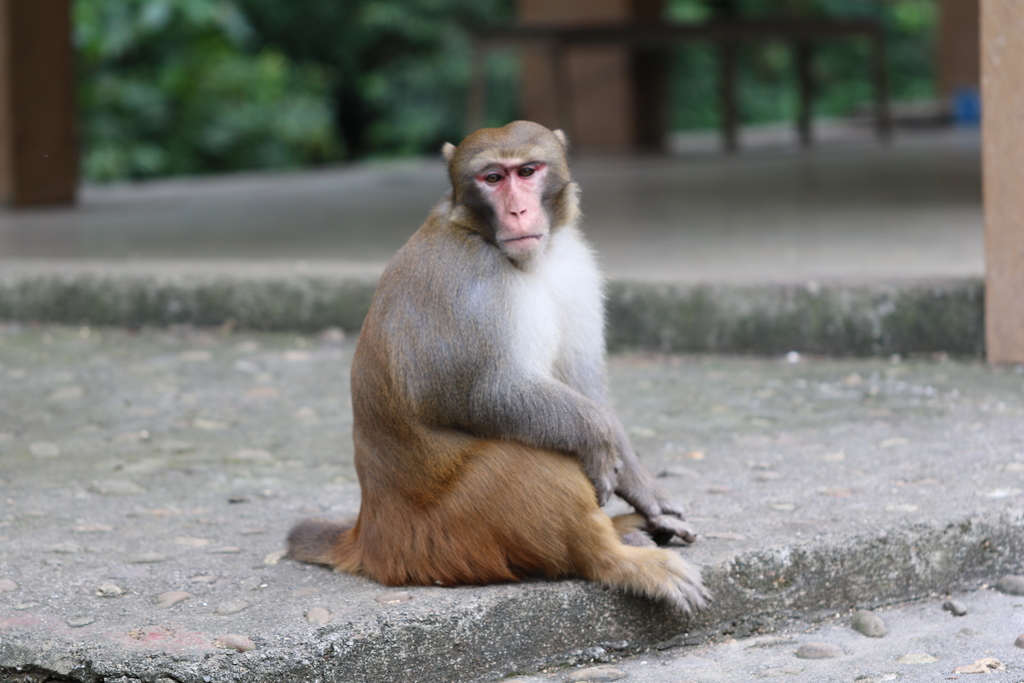
Rhesus Macaque
Macaca mulatta
Mammalstrong against birds, fungi
Common
Pack
While active with another mammal in play, it hits 7 harder (14 with two others).
43

32
Rhesus Macaque
Macaca mulatta
Mammalstrong against birds, fungi
Common
While active with another mammal in play, it hits 7 harder (14 with two others).
Macaca mulatta
Photo: © Donald Hobern (original photo) · CC BY 4.0 (licence text) · cropped
Strong against: it deals 20% more damage to them. Weak against: these types deal 20% more damage to it.
The rhesus macaque (Macaca mulatta), colloquially rhesus monkey, is a species of Old World monkey in the Macaca genus. There are between six and nine recognised subspecies split between two groups, the Chinese-derived and the Indian-derived. Generally brown or grey in colour, it is 47–53 cm (19–21 in) in length with a 20.7–22.9 cm (8.1–9.0 in) tail and weighs 5.3–7.7 kg (12–17 lb). It is native to South, Central, and Southeast Asia and has the widest geographic range of all non-human primates, occupying a great diversity of altitudes and habitats.
The rhesus macaque is diurnal, arboreal, and terrestrial. It is mostly herbivorous, feeding mainly on fruit, but also eating seeds, roots, buds, bark, and cereals. Rhesus macaques living in cities also eat human food and trash. They are gregarious, with troops comprising 20–200 individuals. The social groups are matrilineal. Individuals communicate with a variety of facial expressions, vocalisations, body postures, and gestures.
As a result of the rhesus macaque's relatively easy upkeep, wide availability, and closeness to humans anatomically and physiologically, it has been used extensively in medical and biological research. It has facilitated many scientific breakthroughs including vaccines for rabies, smallpox, polio, and antiretroviral medication to treat HIV/AIDS. A rhesus macaque became the first primate astronaut in 1948.
The rhesus is listed as Least Concern in the IUCN Red List.
Excerpt from the Wikipedia article Rhesus macaque, by its authors, under the CC BY-SA 4.0 licence.
Least Concern on the IUCN Red List: that’s what makes this card Common.
Every Common card has 100 points, shared between HP, ATK and DEF:
How they’re shared out:

 DEF 32