 …
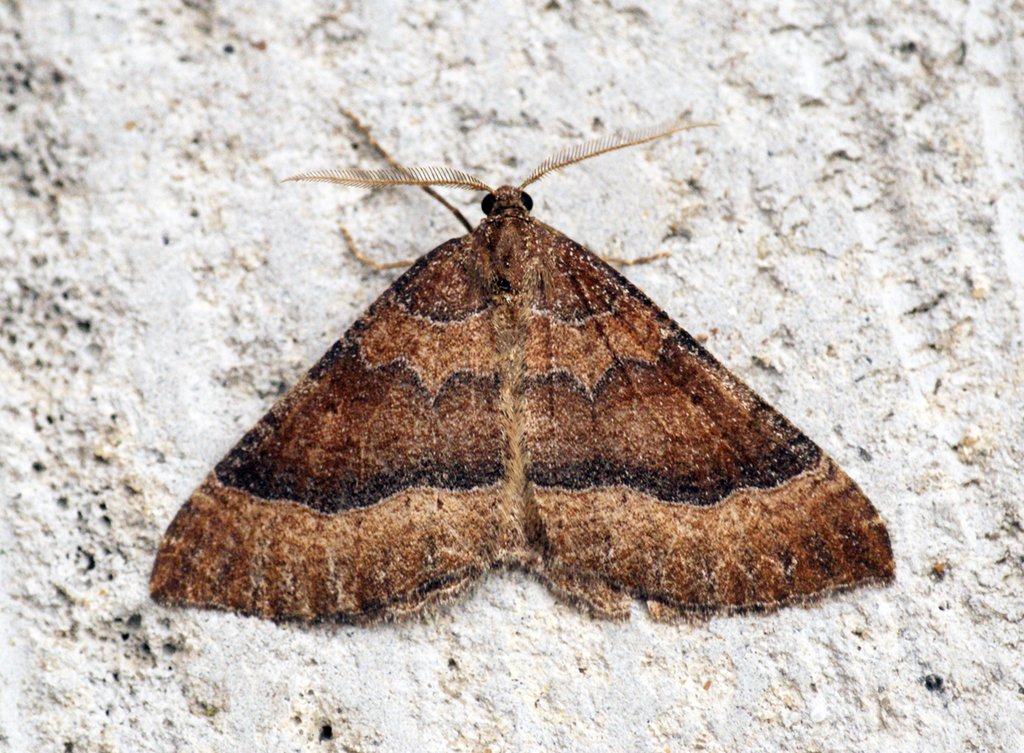
Mallow
Larentia clavaria
Insectstrong against fungi, fish
Common
Swarm
While active with another insect in play, each of its attacks also hits the opposing bench for 10, without knocking them out (20 with two others).
40

38
Mallow
Larentia clavaria
Insectstrong against fungi, fish
Common
While active with another insect in play, each of its attacks also hits the opposing bench for 10, without knocking them out (20 with two others).
Larentia clavaria
Photo: © Ben Sale (original photo) · CC BY 4.0 (licence text) · cropped
Strong against: it deals 20% more damage to them. Weak against: these types deal 20% more damage to it.
Larentia clavaria, the mallow, is a moth of the family Geometridae. The species was first described by Adrian Hardy Haworth in 1809. It is found from Siberia (Altai Mountains) in the east to the Iberian Peninsula, North Africa, and the British Isles in the west. In the north it ranges to the Caucasus, Tajikistan and Fennoscandia. In the south it is found the western Mediterranean islands, Italy, the Balkans and Asia Minor. It occurs only locally and is almost always rare. In the Alps, it rises up to 1200 m above sea level.
The wingspan is 36–40 mm. Forewings are fawn colour with a browner basal patch, median band and distal shade, all finely and delicately white-edged distally, the median band also accompanied by a fine white line proximally, sharply indented on the submedian fold and more shallowly in the cell. Hindwing pale, becoming browner at the distal margin. The larva is long and slender, monochrome bright yellow-green.
The moth flies from August to November depending on the location.
The larvae feed on Althaea officinalis and Malva species.
Excerpt from the Wikipedia article Larentia clavaria, by its authors, under the CC BY-SA 4.0 licence.
No global status on the IUCN Red List: that’s what makes this card Common.
Every Common card has 100 points, shared between HP, ATK and DEF:
How they’re shared out:

 DEF 38