 …
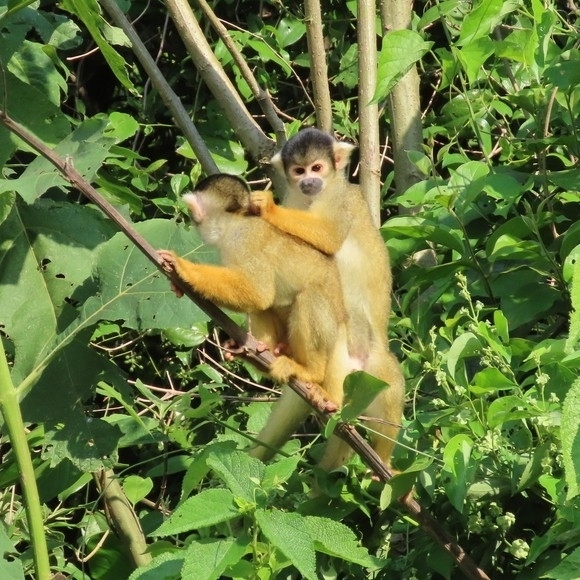
Black-capped Squirrel Monkey
Saimiri boliviensis
Mammalstrong against birds, fungi
Common
Pack
While active with another mammal in play, it hits 7 harder (14 with two others).
31

36
Black-capped Squirrel Monkey
Saimiri boliviensis
Mammalstrong against birds, fungi
Common
While active with another mammal in play, it hits 7 harder (14 with two others).
Saimiri boliviensis
Photo: © Kozue Kawakami (original photo) · CC BY-SA 4.0 (licence text) · cropped
Strong against: it deals 20% more damage to them. Weak against: these types deal 20% more damage to it.
The black-capped squirrel monkey (Saimiri boliviensis) is a species of New-World monkey native to the upper Amazon basin in Bolivia, western Brazil and eastern Peru. They weigh between 365 and 1,135 g (13 and 40 oz) and measure, from the head to the base of the tail, between 225 and 370 mm (9 and 15 in). The black-capped squirrel monkey is primarily tree-dwelling and is found in both native and plantation forests as well as some farmed areas near running water. Its diet is omnivorous and mostly consists of flowers, fruit, leaves, nuts, seeds, insects, arachnids, eggs and small vertebrates. It mostly lives in female-dominated troops of around 40 to 75 monkeys, with males having been observed to disperse to live in all-male troops after reaching sexual maturation. Its current conservation status according to the International Union for Conservation of Nature (IUCN) is 'Least Concern'. The species belongs to the genus Saimiri and has two subspecies, S. b. boliviensis (the Bolivian squirrel monkey) and S. b. peruviensis (the Peruvian squirrel monkey).
Excerpt from the Wikipedia article Black-capped squirrel monkey, by its authors, under the CC BY-SA 4.0 licence.
Least Concern on the IUCN Red List: that’s what makes this card Common.
Every Common card has 100 points, shared between HP, ATK and DEF:
How they’re shared out:

 DEF 36