 …
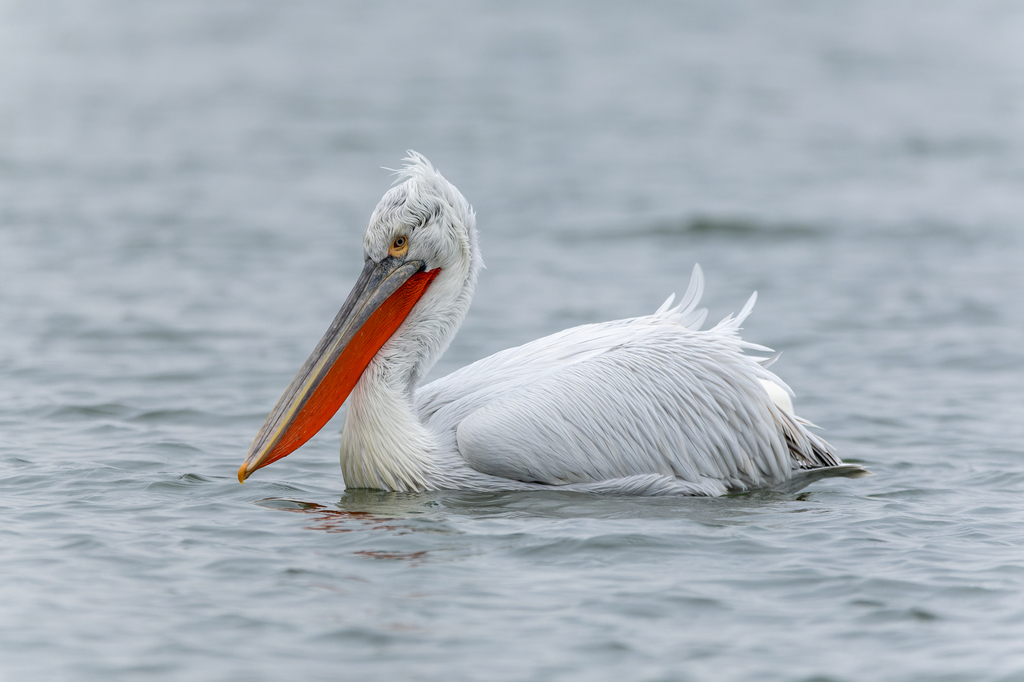
Dalmatian Pelican
Pelecanus crispus
Birdstrong against fish, reptiles
Uncommon
Swoop
While active with another bird in play, it hits 6 harder on its first attack after entering play (12 with two others).
35

38
Dalmatian Pelican
Pelecanus crispus
Birdstrong against fish, reptiles
Uncommon
While active with another bird in play, it hits 6 harder on its first attack after entering play (12 with two others).
Pelecanus crispus
Photo: © David F. Belmonte (original photo) · CC BY 4.0 (licence text) · cropped
Strong against: it deals 20% more damage to them. Weak against: these types deal 20% more damage to it.
The Dalmatian pelican (Pelecanus crispus), also known as the curly-headed pelican, is the largest member of the pelican family and among the heaviest flying birds in the world. With a wingspan typically ranging between 2.7 and 3.2 metres (8 ft 10 in and 10 ft 6 in), it ranks among the largest soaring birds. These pelicans are known for their graceful flight and often travel in synchronised flocks. With a range spanning across much of Central Eurasia, from the eastern Mediterranean in the west to the Taiwan Strait in the east, and from the Persian Gulf in the south to Siberia in the north, it is a short-to-medium-distance migrant between breeding and overwintering areas.
As with other pelicans, its diet is mainly fish, and the males are larger than the females. Its curly nape feathers, grey legs and silvery-white plumage are distinguishing features, and the wings appear solid grey in flight. The adults acquire a drabber plumage in winter, however, making them look more similar to the great white pelican. Its harsh vocalizations become more pronounced during the mating season. It breeds across the Palearctic from southeastern Europe to Russia, India and China in swamps and shallow lakes. It usually returns to traditional breeding sites, where it is less social than other pelican species. Its nests are crude heaps of vegetation, which are placed on islands or dense mats of vegetation.
Abridged excerpt from the Wikipedia article Dalmatian pelican, by its authors, under the CC BY-SA 4.0 licence.
Near Threatened on the IUCN Red List: that’s what makes this card Uncommon.
Every Uncommon card has 115 points, shared between HP, ATK and DEF:
How they’re shared out:

 DEF 38