 …
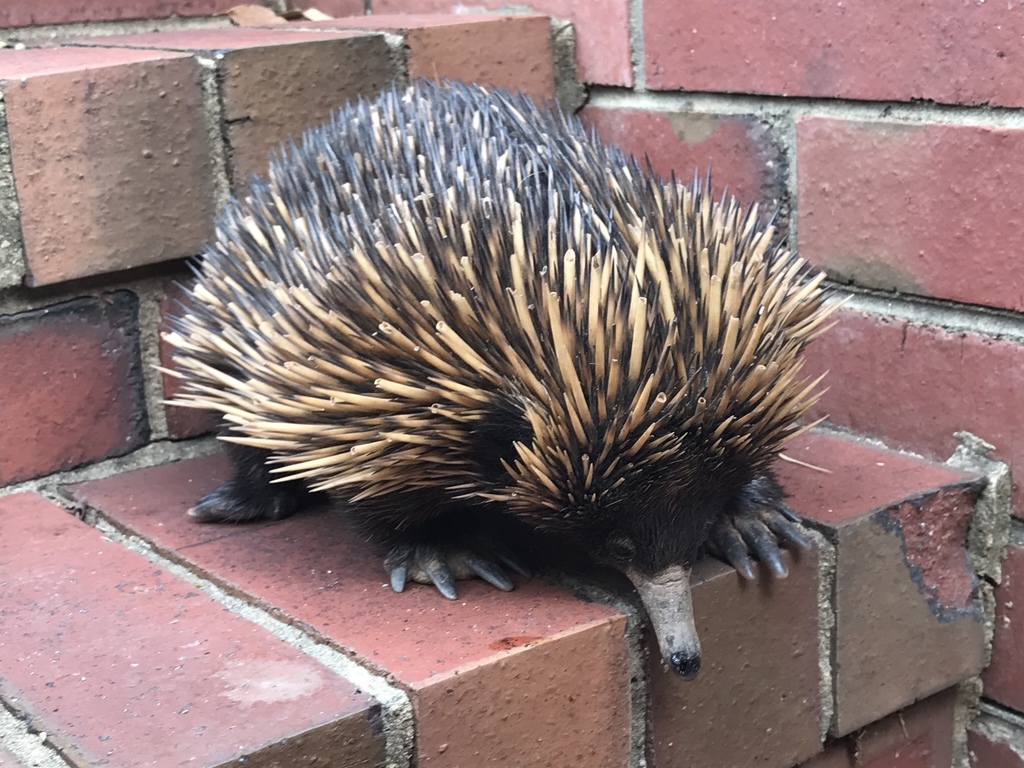
Short-beaked Echidna
Tachyglossus aculeatus
Mammalstrong against birds, fungi
Common
Pack
While active with another mammal in play, it hits 7 harder (14 with two others).
33

32
Short-beaked Echidna
Tachyglossus aculeatus
Mammalstrong against birds, fungi
Common
While active with another mammal in play, it hits 7 harder (14 with two others).
Tachyglossus aculeatus
Photo: iNaturalist (original photo) · CC0 (licence text) · cropped
Strong against: it deals 20% more damage to them. Weak against: these types deal 20% more damage to it.
The short-beaked echidna (Tachyglossus aculeatus), also known as the common echidna, or short-nosed echidna, is one of four living species of echidna, and the only member of the genus Tachyglossus, from Ancient Greek ταχύς (takhús), meaning "fast", and γλῶσσα (glôssa), meaning "tongue". It is covered in fur and spines and has a distinctive snout and a specialised tongue, which it uses to catch its insect prey at a great speed. Like the other extant monotremes, the short-beaked echidna lays eggs; the monotremes are the only living group of mammals to do so.
The short-beaked echidna has extremely strong front limbs and claws, which allow it to burrow quickly with great power. As it needs to be able to survive underground, it has a significant tolerance to high levels of carbon dioxide and low levels of oxygen. It has no weapons or fighting ability but deters predators by curling into a ball and protecting itself with its spines. It cannot sweat or deal well with heat, so it tends to avoid daytime activity in hot weather. It can swim if needed. The snout has mechanoreceptors and electroreceptors that help the echidna to detect its surroundings.
Abridged excerpt from the Wikipedia article Short-beaked echidna, by its authors, under the CC BY-SA 4.0 licence.
Least Concern on the IUCN Red List: that’s what makes this card Common.
Every Common card has 100 points, shared between HP, ATK and DEF:
How they’re shared out:

 DEF 32