 …
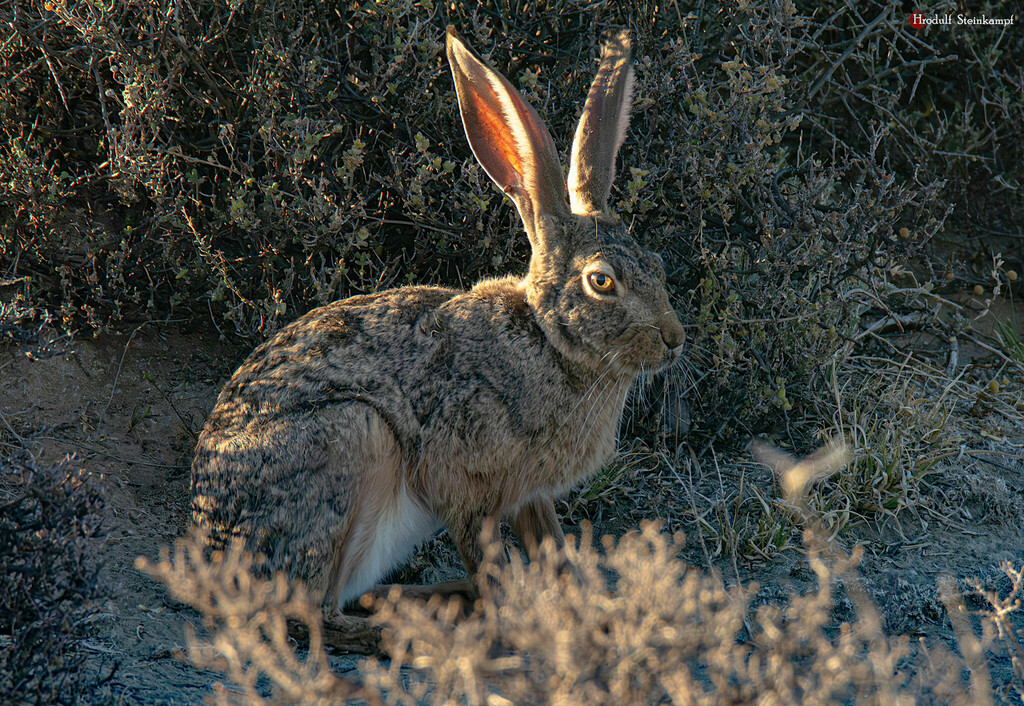
Scrub Hare
Lepus saxatilis
Mammalstrong against birds, fungi
Common
Pack
While active with another mammal in play, it hits 7 harder (14 with two others).
40

35
Scrub Hare
Lepus saxatilis
Mammalstrong against birds, fungi
Common
While active with another mammal in play, it hits 7 harder (14 with two others).
Lepus saxatilis
Photo: © Rudolph Steenkamp (original photo) · CC BY-SA 4.0 (licence text) · cropped
Strong against: it deals 20% more damage to them. Weak against: these types deal 20% more damage to it.
The Cape scrub hare (Lepus saxatilis) (Afrikaans: ribbokhaas) is a species of hare found in South Africa and Namibia. It is a medium to large-sized hare with coarse grizzled-gray fur along most of its body, white undersides, a black and white tail, and black-tipped ears. The hare's eyes are ringed with white. It is similar in appearance to the smaller African savanna hare, a species found in a broader range across Africa. The Cape scrub hare is largely restricted to savanna, woodland, and scrubland habitats, though it is found at the borders or ecotones of some forest and mountain habitats. It is fairly adaptable, able to inhabit regions where agriculture has modified the land.
The International Union for Conservation of Nature considers the Cape scrub hare to be a least-concern species, as it is fairly common and appears in several protected areas. However, its population has been declining, and is expected to decrease by 20% over the next 100 years, according to a 2004 report. Some populations are becoming fragmented due to agricultural development; the hare is also threatened by hunting for food and use in traditional medicine.
Excerpt from the Wikipedia article Cape scrub hare, by its authors, under the CC BY-SA 4.0 licence.
Least Concern on the IUCN Red List: that’s what makes this card Common.
Every Common card has 100 points, shared between HP, ATK and DEF:
How they’re shared out:

 DEF 35