 …
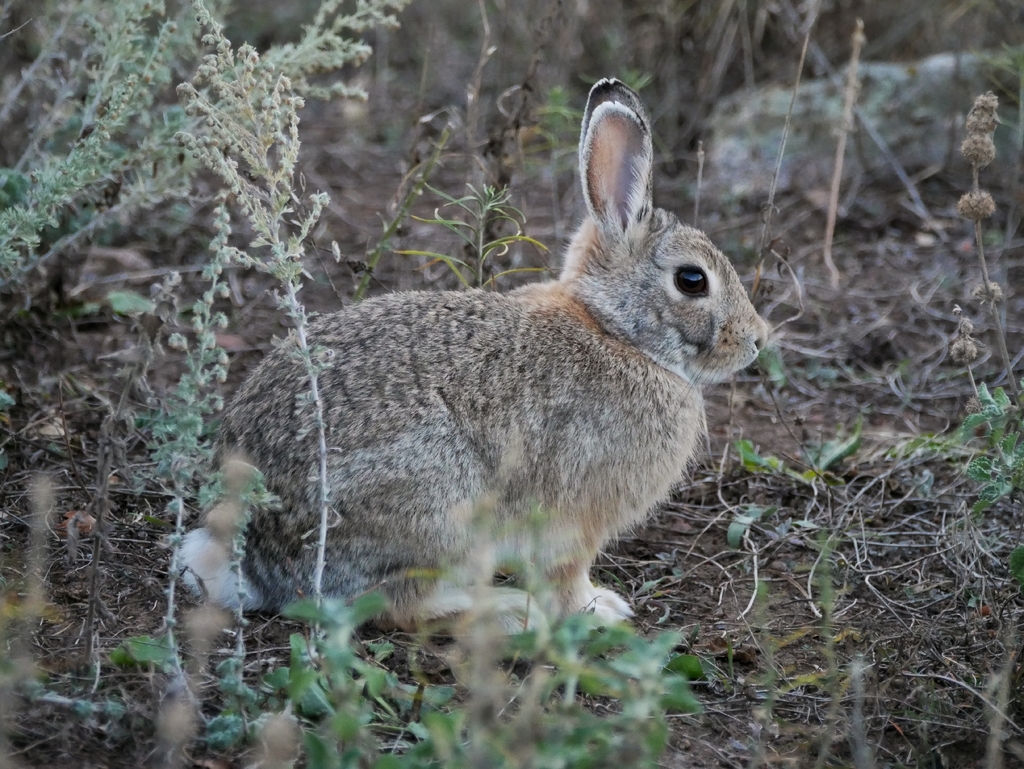
Mountain Cottontail
Sylvilagus nuttallii
Mammalstrong against birds, fungi
Common
Pack
While active with another mammal in play, it hits 7 harder (14 with two others).
44

33
Mountain Cottontail
Sylvilagus nuttallii
Mammalstrong against birds, fungi
Common
While active with another mammal in play, it hits 7 harder (14 with two others).
Sylvilagus nuttallii
Photo: © ayden (original photo) · CC BY 4.0 (licence text) · cropped
Strong against: it deals 20% more damage to them. Weak against: these types deal 20% more damage to it.
The mountain cottontail or Nuttall's cottontail (Sylvilagus nuttallii) is a species of rabbit found in western Canada and the United States. It is a medium- to small-sized rabbit with pale brown fur, white undersides, a two-colored tail, and black-tipped, rounded ears with densely furred insides. It has notably rusty-colored legs and an orange nape. The mountain cottontail appears largely among coniferous forests in mountainous regions, including the slopes of the Rocky Mountains and the Cascade-Sierra Nevada mountain ranges, and adapts to a variety of elevations and vegetation. Its diet is made up of various grasses, shrubs, and sagebrush, as well as twigs, bark, or fungi in lesser amounts or when foliage is scarce.
The mountain cottontail was first described in 1837 by naturalist John Bachman and named Lepus nuttallii; the specific name commemorates zoologist Thomas Nuttall. Marcus Ward Lyon Jr. placed the species in the genus Sylvilagus in 1904. The species is closely related to the desert cottontail, and less so to the swamp rabbit and marsh rabbit. There are three subspecies of the mountain cottontail, and limited evidence points to the three as each making up distinct species.
Abridged excerpt from the Wikipedia article Mountain cottontail, by its authors, under the CC BY-SA 4.0 licence.
Least Concern on the IUCN Red List: that’s what makes this card Common.
Every Common card has 100 points, shared between HP, ATK and DEF:
How they’re shared out:

 DEF 33