 …
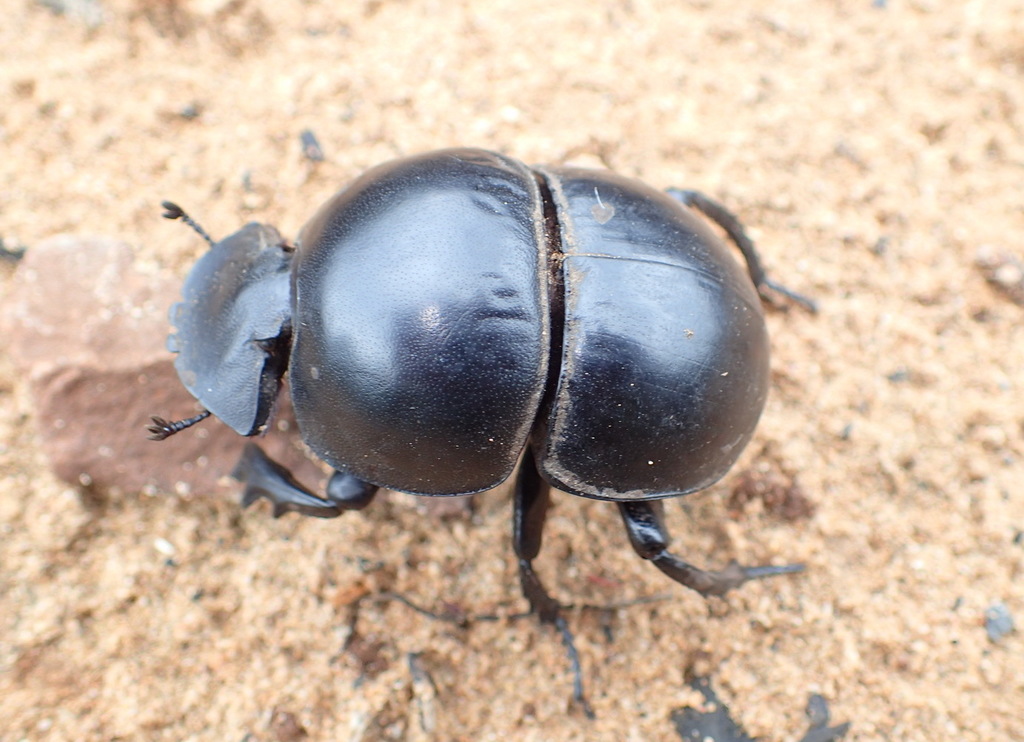
Cape Flightless Dung Beetle
Circellium bacchus
Insectstrong against fungi, fish
Uncommon
Swarm
While active with another insect in play, each of its attacks also hits the opposing bench for 10, without knocking them out (20 with two others).
34

43
Cape Flightless Dung Beetle
Circellium bacchus
Insectstrong against fungi, fish
Uncommon
While active with another insect in play, each of its attacks also hits the opposing bench for 10, without knocking them out (20 with two others).
Circellium bacchus
Photo: © Nicola van Berkel (original photo) · CC BY-SA 4.0 (licence text) · cropped
Strong against: it deals 20% more damage to them. Weak against: these types deal 20% more damage to it.
The flightless dung beetle (Circellium bacchus) is a species of dung beetle endemic to a few areas of South Africa, including the Addo Elephant National Park, Amakhala Game Reserve and the Buffalo Valley Game Farm. It is the only species in the genus Circellium. The loss of flight allows the beetle to use the empty space below the elytra as a carbon dioxide storage tank, creating a unique breathing mechanism which conserves water, a valuable survival trait in the arid regions it lives in.
The species was originally widespread in Southern Africa, but it only survives in the few areas mentioned above; as such, it qualifies as an IUCN vulnerable species. Its vulnerability is exacerbated by a number of other factors, including the fact that its habitat is under threat by agriculture and human activity, that it has low breeding capacity as well as low dispersability (as a consequence of being flightless), and that its survival is strictly dependent on a number of vertebrates (particularly elephant and buffalo) that are also experiencing a decrease in population.
The flightless dung beetles mostly feed on elephant or buffalo faeces, but they have been recorded to also feed on dung from other species such as rabbits, baboons, antelopes, and ostriches.
Excerpt from the Wikipedia article Flightless dung beetle, by its authors, under the CC BY-SA 4.0 licence.
Near Threatened on the IUCN Red List: that’s what makes this card Uncommon.
Every Uncommon card has 115 points, shared between HP, ATK and DEF:
How they’re shared out:

 DEF 43