 …
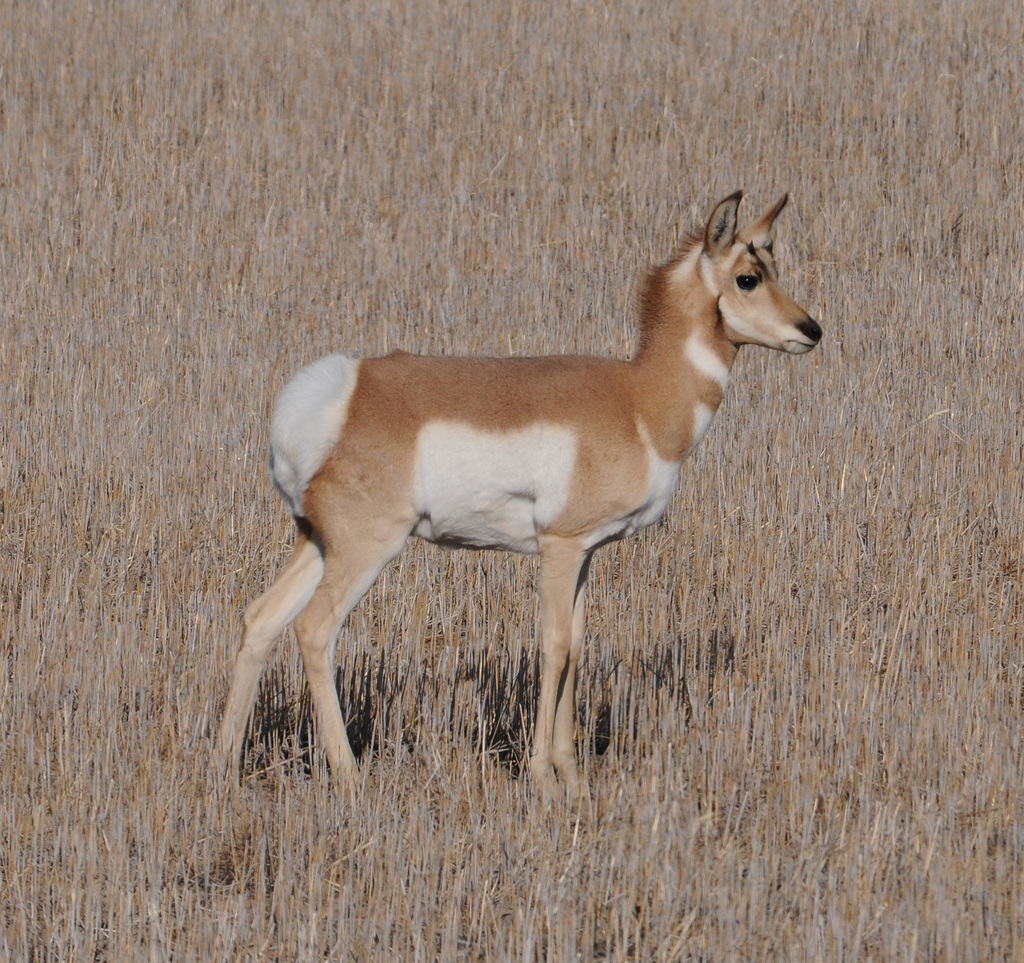
Pronghorn
Antilocapra americana
Mammalstrong against birds, fungi
Common
Pack
While active with another mammal in play, it hits 7 harder (14 with two others).
42

31
Pronghorn
Antilocapra americana
Mammalstrong against birds, fungi
Common
While active with another mammal in play, it hits 7 harder (14 with two others).
Antilocapra americana
Photo: © Todd Boland (original photo) · CC BY 4.0 (licence text) · cropped
Strong against: it deals 20% more damage to them. Weak against: these types deal 20% more damage to it.
The pronghorn (UK:, US) (Antilocapra americana) is a species of artiodactyl (even-toed, hoofed) mammal indigenous to interior western and central North America. Though not an antelope, it is known colloquially in North America as the American antelope, prong buck, pronghorn antelope, and prairie antelope, because it closely resembles the antelopes of the Old World and fills a similar ecological niche due to parallel evolution. It is the only surviving member of the family Antilocapridae.
During the Pleistocene epoch, about 11 other antilocaprid species existed in North America, many with long or spectacularly twisted horns. Three other genera (Capromeryx, Stockoceros and Tetrameryx) existed when humans entered North America, but are now extinct.
The pronghorn's closest living relatives are the giraffe and okapi. The antilocaprids are part of the infraorder Pecora, making them distant relatives of deer, bovids, and moschids.
The pronghorn is the fastest land mammal in the Americas, with running speeds up to 55 mph (88.5 km/h). It is the symbol of the American Society of Mammalogists.
Excerpt from the Wikipedia article Pronghorn, by its authors, under the CC BY-SA 4.0 licence.
Least Concern on the IUCN Red List: that’s what makes this card Common.
Every Common card has 100 points, shared between HP, ATK and DEF:
How they’re shared out:

 DEF 31