 …
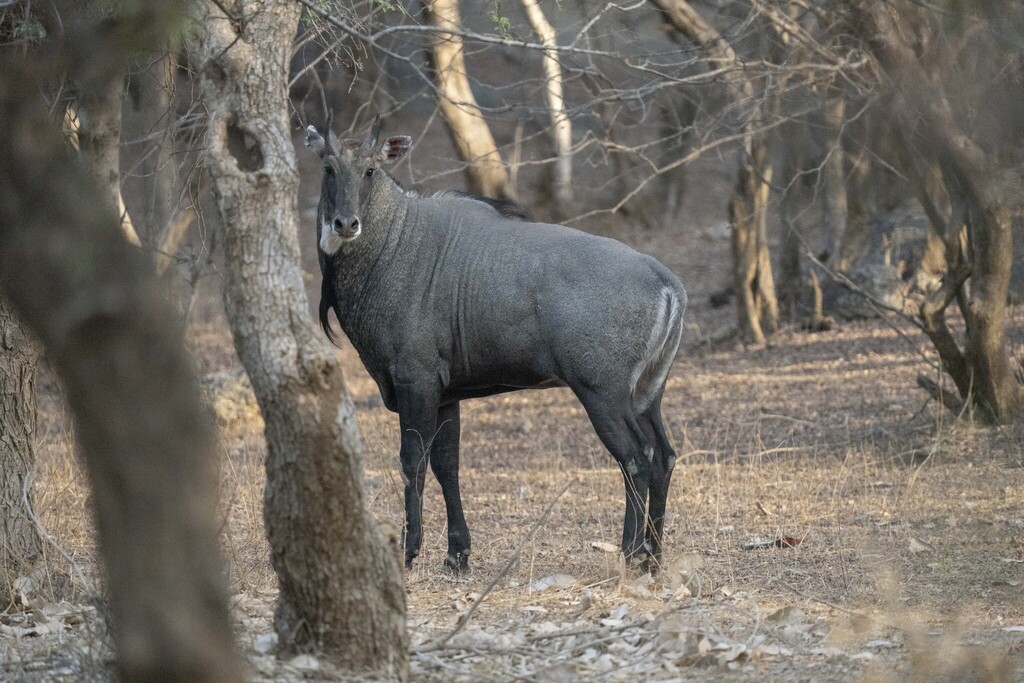
Nilgai
Boselaphus tragocamelus
Mammalstrong against birds, fungi
Common
Pack
While active with another mammal in play, it hits 7 harder (14 with two others).
42

29
Nilgai
Boselaphus tragocamelus
Mammalstrong against birds, fungi
Common
While active with another mammal in play, it hits 7 harder (14 with two others).
Boselaphus tragocamelus
Photo: © Luciano Massa (original photo) · CC BY 4.0 (licence text) · cropped
Strong against: it deals 20% more damage to them. Weak against: these types deal 20% more damage to it.
The nilgai (Boselaphus tragocamelus) (literally meaning "blue cow") is the largest antelope in Asia. It is ubiquitous across the northern Indian subcontinent. It is the sole living member of the genus Boselaphus, which was first scientifically described by Peter Simon Pallas in 1766. It is a sturdy, thin-legged antelope with a sloping back, a deep neck with a white patch on the throat, a short crest of hair along the neck terminating in a tuft, and white facial spots. A column of pendant, coarse hair hangs from the dewlap ridge below the white patch. It stands 100–150 cm (39–59 in) at the shoulder; males weigh 109–288 kg (240–635 lb), and the lighter females 100–213 kg (220–470 lb). Sexual dimorphism is prominent; while females and juveniles are orange to tawny, adult males have a bluish-grey coat. Only males have horns, which are 15–24 cm (5.9–9.4 in) long.
Abridged excerpt from the Wikipedia article Nilgai, by its authors, under the CC BY-SA 4.0 licence.
Least Concern on the IUCN Red List: that’s what makes this card Common.
Every Common card has 100 points, shared between HP, ATK and DEF:
How they’re shared out:

 DEF 29