 …
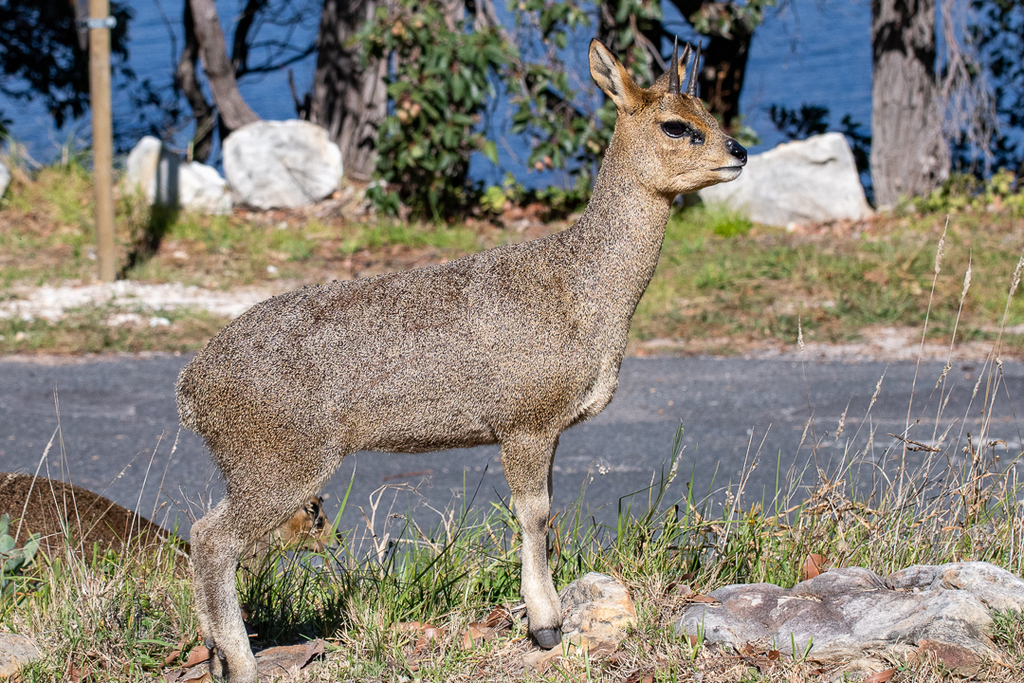
Klipspringer
Oreotragus oreotragus
Mammalstrong against birds, fungi
Common
Pack
While active with another mammal in play, it hits 7 harder (14 with two others).
42

32
Klipspringer
Oreotragus oreotragus
Mammalstrong against birds, fungi
Common
While active with another mammal in play, it hits 7 harder (14 with two others).
Oreotragus oreotragus
Photo: © magriet b (original photo) · CC BY-SA 4.0 (licence text) · cropped
Strong against: it deals 20% more damage to them. Weak against: these types deal 20% more damage to it.
The klipspringer (Oreotragus oreotragus) is a small antelope found in eastern and southern Africa. The sole member of its genus and subfamily/tribe, the klipspringer was first described by German zoologist Eberhard August Wilhelm von Zimmermann in 1783. The klipspringer is a small, sturdy antelope; it reaches 43–60 centimetres (17–23+1⁄2 inches) at the shoulder and weighs from 8 to 18 kilograms (18 to 40 pounds). The coat of the klipspringer, yellowish gray to reddish brown, acts as an efficient camouflage in its rocky habitat. Unlike most other antelopes, the klipspringer has a thick and coarse coat with hollow, brittle hairs. The horns, short and spiky, typically measure 7.5–9 cm (3–3+1⁄2 in).
Typically nocturnal, the klipspringer rests during the middle of the day and late at night. A gregarious animal, the klipspringer is monogamous to a much greater extent than other antelopes; individuals of opposite sexes exhibit long-term to lifelong pair bonding. The mates tend to stay as close as within 5 m (16 ft) of each other at most times. Males form territories, 7.5–49 hectares (18+1⁄2–121 acres), in which they stay with their partners and offspring. Primarily a browser, the klipspringer prefers young plants, fruits and flowers. Gestation lasts around six months, following which a single calf is born; births peak from spring to early summer. The calf leaves its mother when it turns a year old.
Abridged excerpt from the Wikipedia article Klipspringer, by its authors, under the CC BY-SA 4.0 licence.
Least Concern on the IUCN Red List: that’s what makes this card Common.
Every Common card has 100 points, shared between HP, ATK and DEF:
How they’re shared out:

 DEF 32