 …
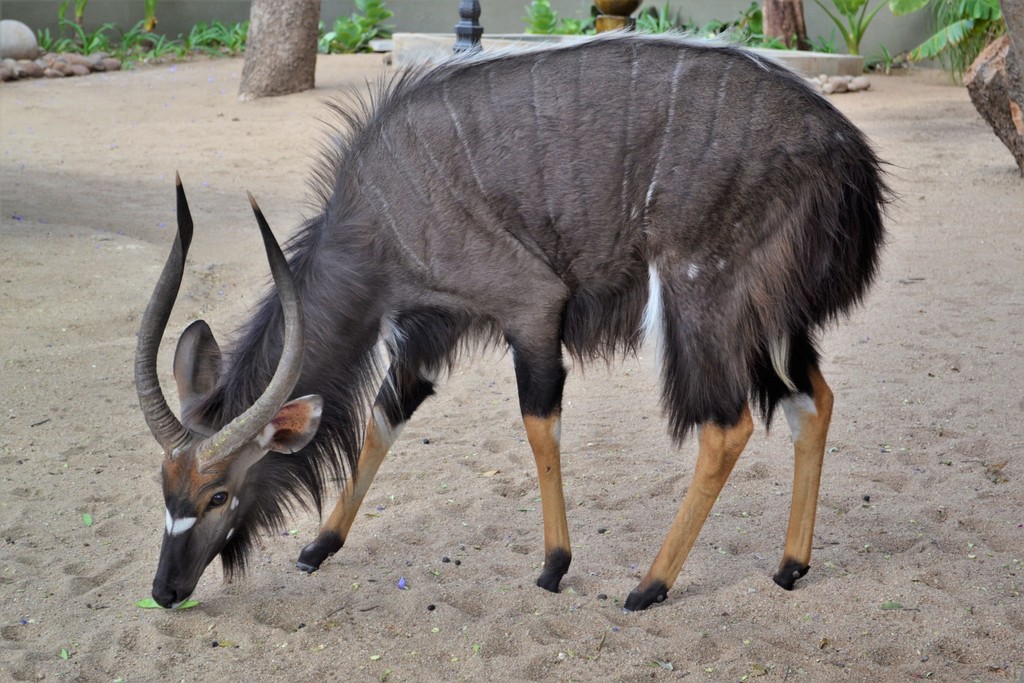
Nyala
Tragelaphus angasii
Mammalstrong against birds, fungi
Common
Pack
While active with another mammal in play, it hits 7 harder (14 with two others).
32

30
Nyala
Tragelaphus angasii
Mammalstrong against birds, fungi
Common
While active with another mammal in play, it hits 7 harder (14 with two others).
Tragelaphus angasii
Photo: © Rafael Tosi (original photo) · CC BY 4.0 (licence text) · cropped
Strong against: it deals 20% more damage to them. Weak against: these types deal 20% more damage to it.
The lowland nyala or simply nyala (Tragelaphus angasii) is a spiral-horned artiodactyl antelope native to Southern Africa. The species is part of the family Bovidae and the genus Tragelaphus (formerly placed in the genus Nyala, now regarded as a subgenus). It was first described in 1849 by George French Angas and exhibits the highest sexual dimorphism among the spiral-horned antelopes. It is not to be confused with the endangered mountain nyala living in the Bale region of Ethiopia.
The nyala's range encompasses much of Southern Africa. As its population is relatively stable, it has been listed as of least concern by the International Union for Conservation of Nature. It generally browses during the day in warm weather and during the night in the rainy season. As a herbivore, the nyala feeds upon foliage, fruits and grasses, and requires sufficient fresh water. A shy animal, it prefers water holes rather than open spaces. The nyala does not show signs of territoriality, and individuals' areas can overlap. They are very cautious creatures.
They live in single-sex or mixed family groups of up to ten individuals, but old males live alone. They inhabit thickets within dense and dry savanna woodlands. The principal threats to the species are illegal poaching and habitat loss resulting from human settlement and livestock grazing. However, the large-horned, impressive males are highly prized as game animals by sport hunters.
Excerpt from the Wikipedia article Nyala, by its authors, under the CC BY-SA 4.0 licence.
Least Concern on the IUCN Red List: that’s what makes this card Common.
Every Common card has 100 points, shared between HP, ATK and DEF:
How they’re shared out:

 DEF 30