 …
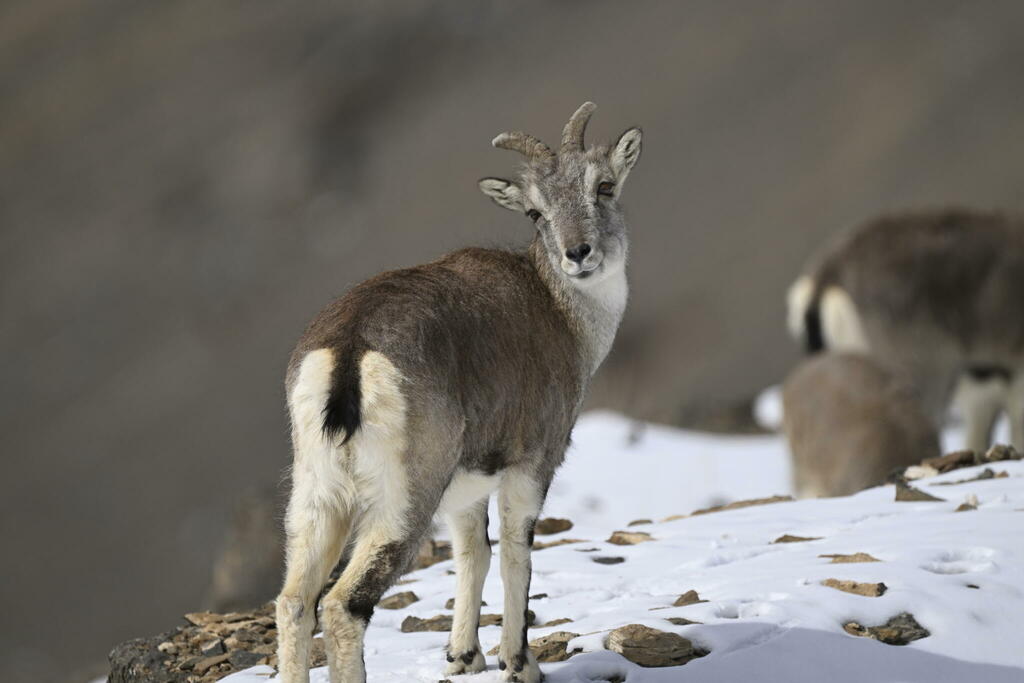
Bharal
Pseudois nayaur
Mammalstrong against birds, fungi
Common
Pack
While active with another mammal in play, it hits 7 harder (14 with two others).
41

32
Bharal
Pseudois nayaur
Mammalstrong against birds, fungi
Common
While active with another mammal in play, it hits 7 harder (14 with two others).
Pseudois nayaur
Photo: © Biray Pinar (original photo) · CC BY 4.0 (licence text) · cropped
Strong against: it deals 20% more damage to them. Weak against: these types deal 20% more damage to it.
The bharal (Pseudois nayaur), also called the blue sheep, is a caprine native to the high Himalayas. It inhabits the Himalayan alpine meadows and rocky slopes across Bhutan, China, India, Myanmar, Nepal, and Pakistan, typically at altitudes of 2,200–5,500 m (7,200–18,000 ft).
The bharal is the only member of its genus Pseudois and is genetically closer to goats (Capra) than sheep (Ovis). Two main subspecies are recognized: the Himalayan blue sheep (P. n. nayaur) and the Chinese blue sheep (P. n. szechuanensis), with recent studies suggesting the Helanshan blue sheep may be a distinct subspecies. The dwarf blue sheep was once considered a separate species but is now classified as a variant of the Chinese blue sheep.
The bharal is a medium-sized caprine, measuring 115–165 cm (45–65 in) in length, and weighing 35–75 kg (77–165 lb). It has a slate-grey fur with white underparts. Both sexes have horns, with the males having larger curved horns measuring up to 80 cm (31 in). The Helanshan variant is smaller in size, with less pronounced sexual dimorphism and straighter horns.
Abridged excerpt from the Wikipedia article Bharal, by its authors, under the CC BY-SA 4.0 licence.
Least Concern on the IUCN Red List: that’s what makes this card Common.
Every Common card has 100 points, shared between HP, ATK and DEF:
How they’re shared out:

 DEF 32