 …
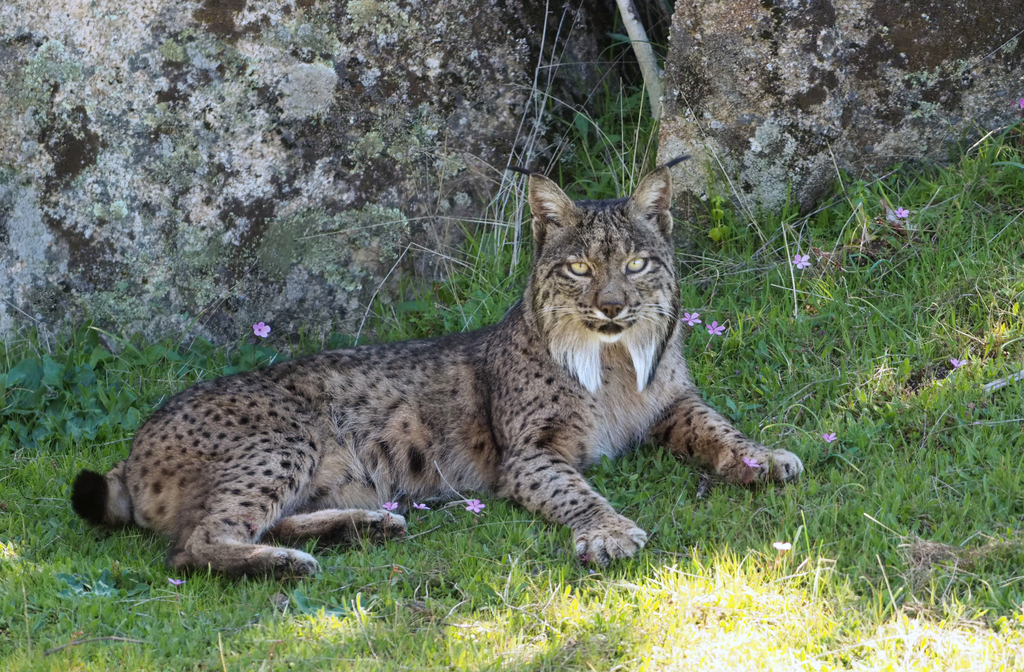
Iberian Lynx
Lynx pardinus
Mammalstrong against birds, fungi
Rare
Pack
While active with another mammal in play, it hits 7 harder (14 with two others).
40

41
Iberian Lynx
Lynx pardinus
Mammalstrong against birds, fungi
Rare
While active with another mammal in play, it hits 7 harder (14 with two others).
Lynx pardinus
Photo: © Frank Vassen (original photo) · CC BY 4.0 (licence text) · cropped
Strong against: it deals 20% more damage to them. Weak against: these types deal 20% more damage to it.
The Iberian lynx (Lynx pardinus) is one of four extant species of Lynx, a genus of medium-sized wild cats. It is endemic to the Iberian Peninsula. Fossils suggest that it has been present in Iberia since the end of the Early Pleistocene around 1 million years ago. It is a monotypic species and is thought to have evolved from Lynx issiodorensis.
The Iberian lynx population declined in the 20th century primarily due to overhunting, poaching, fragmentation of suitable habitats, and the population decline of its main prey species, such as the European rabbit (Oryctolagus cuniculus), caused by myxomatosis and rabbit haemorrhagic disease. By the turn of the 21st century, the Iberian lynx was on the verge of extinction, as only 94 individuals survived in two isolated subpopulations in Andalusia in 2002. Since then, conservation measures have been implemented, which included improving habitat, restocking of rabbits, translocating, reintroducing, and monitoring Iberian lynxes. Between 2012 and 2024, the population had increased from a low of 326 individuals to some 2,021, leading to its reclassification as vulnerable on the IUCN Red List.
Excerpt from the Wikipedia article Iberian lynx, by its authors, under the CC BY-SA 4.0 licence.
Vulnerable on the IUCN Red List: that’s what makes this card Rare.
Every Rare card has 130 points, shared between HP, ATK and DEF:
How they’re shared out:

 DEF 41