 …
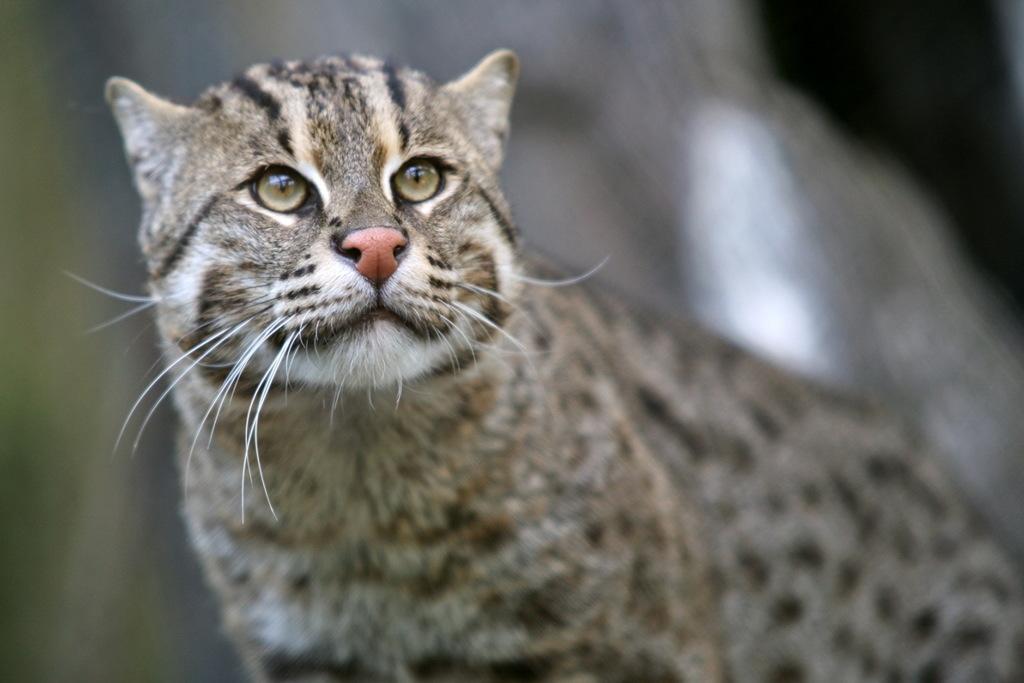
Fishing Cat
Prionailurus viverrinus
Mammalstrong against birds, fungi
Rare
Pack
While active with another mammal in play, it hits 7 harder (14 with two others).
40

40
Fishing Cat
Prionailurus viverrinus
Mammalstrong against birds, fungi
Rare
While active with another mammal in play, it hits 7 harder (14 with two others).
Prionailurus viverrinus
Photo: © Cliff (original photo) · CC BY 4.0 (licence text) · cropped
Strong against: it deals 20% more damage to them. Weak against: these types deal 20% more damage to it.
The fishing cat (Prionailurus viverrinus) is a medium-sized wild cat of South and Southeast Asia. It has a deep yellowish-grey fur with black lines and spots. Adults have a head-to-body length of 57 to 78 cm (22 to 31 in), with a 20 to 30 cm (8 to 12 in) long tail. Males are larger than females, weighing 8 to 17 kg (18 to 37 lb), while females average 5 to 9 kg (11 to 20 lb). It lives mostly in the vicinity of wetlands, along rivers, streams, oxbow lakes, in swamps and mangroves where it preys mostly on fish. Other prey items include birds, insects, small rodents, molluscs, reptiles including snakes, amphibians and carrion of cattle. The fishing cat is thought to be primarily nocturnal. It is a good swimmer and can swim long distances, even underwater.
The fishing cat has been listed as a vulnerable species on the IUCN Red List since 2016, as the global population is thought to have declined by about 30% in the past three fishing cat generations during the period 2010–2015. The destruction of wetlands and killing by local people are the major threats throughout its range.
Excerpt from the Wikipedia article Fishing cat, by its authors, under the CC BY-SA 4.0 licence.
Vulnerable on the IUCN Red List: that’s what makes this card Rare.
Every Rare card has 130 points, shared between HP, ATK and DEF:
How they’re shared out:

 DEF 40