 …
European Polecat
Mustela putorius
Mammalstrong against birds, fungi
Common
Pack
While active with another mammal in play, it hits 7 harder (14 with two others).
29

32
European Polecat
Mustela putorius
Mammalstrong against birds, fungi
Common
While active with another mammal in play, it hits 7 harder (14 with two others).
Mustela putorius
Photo: © Peter Trimming (original photo) · CC BY 4.0 (licence text) · cropped
Strong against: it deals 20% more damage to them. Weak against: these types deal 20% more damage to it.
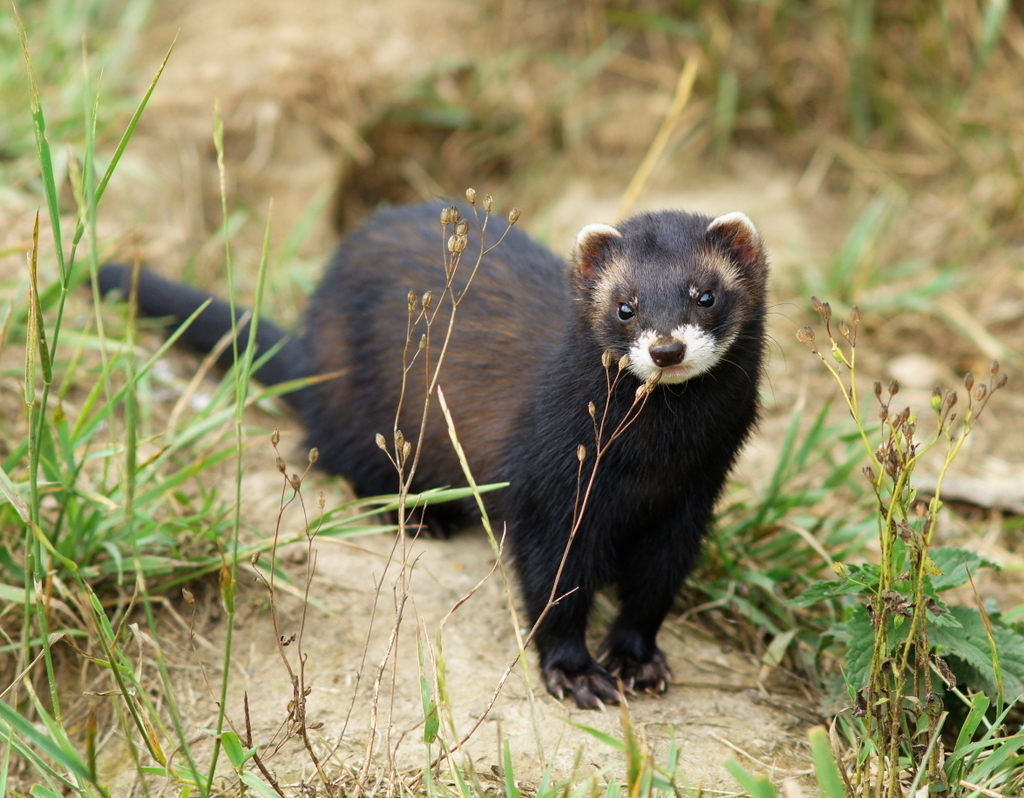
The European polecat (Mustela putorius), also known as the western polecat, is a mustelid species occurring in Europe and the Rif mountains. It is of a generally dark brown colour, with a pale underbelly and a dark mask across the face. Occasionally, colour mutations including albinos, leucists, isabellinists, xanthochromists, amelanists, and erythrists occur. It has a shorter, more compact body than other Mustela species, a more powerfully built skull and dentition, is less agile, and is well known for having the characteristic ability to secrete a particularly foul-smelling liquid to mark its territory.
It is much less territorial than other mustelids, with animals of the same sex frequently sharing home ranges. Like other mustelids, the European polecat is polygamous, with pregnancy occurring after mating, following induced ovulation. It usually gives birth in early summer to litters consisting of five to ten kits, which become independent at the age of two to three months. The European polecat feeds on small rodents, birds, amphibians and reptiles. It occasionally cripples its prey by piercing its brain with its teeth and stores it, still living, in its burrow for future consumption.
Abridged excerpt from the Wikipedia article European polecat, by its authors, under the CC BY-SA 4.0 licence.
Least Concern on the IUCN Red List: that’s what makes this card Common.
Every Common card has 100 points, shared between HP, ATK and DEF:
How they’re shared out:

 DEF 32