 …
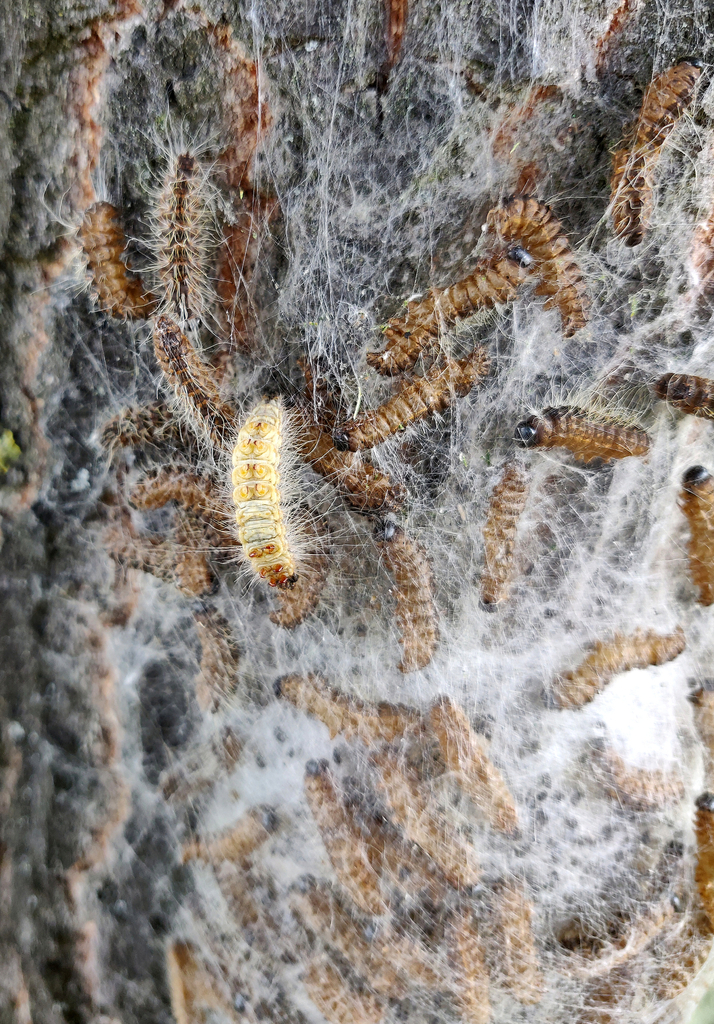
Oak Processionary
Thaumetopoea processionea
Insectstrong against fungi, fish
Common
Swarm
While active with another insect in play, each of its attacks also hits the opposing bench for 10, without knocking them out (20 with two others).
40

38
Oak Processionary
Thaumetopoea processionea
Insectstrong against fungi, fish
Common
While active with another insect in play, each of its attacks also hits the opposing bench for 10, without knocking them out (20 with two others).
Thaumetopoea processionea
Photo: © pmcabinet (original photo) · CC BY 4.0 (licence text) · cropped
Strong against: it deals 20% more damage to them. Weak against: these types deal 20% more damage to it.
The oak processionary (OPM) (Thaumetopoea processionea) is a moth whose caterpillars can be found in oak forests, where they feed on oak leaves, causing significant damage. They travel in nose-to-tail processions (hence their name), often arrow-headed, with a leader followed by rows of several caterpillars abreast. They are a human irritant because of their venomous setae (specifically urticating hairs), which can cause skin irritation and asthma. The species was first described by Carl Linnaeus in his 1758 10th edition of Systema Naturae.
Excerpt from the Wikipedia article Oak processionary, by its authors, under the CC BY-SA 4.0 licence.
No global status on the IUCN Red List: that’s what makes this card Common.
Every Common card has 100 points, shared between HP, ATK and DEF:
How they’re shared out:

 DEF 38