 …
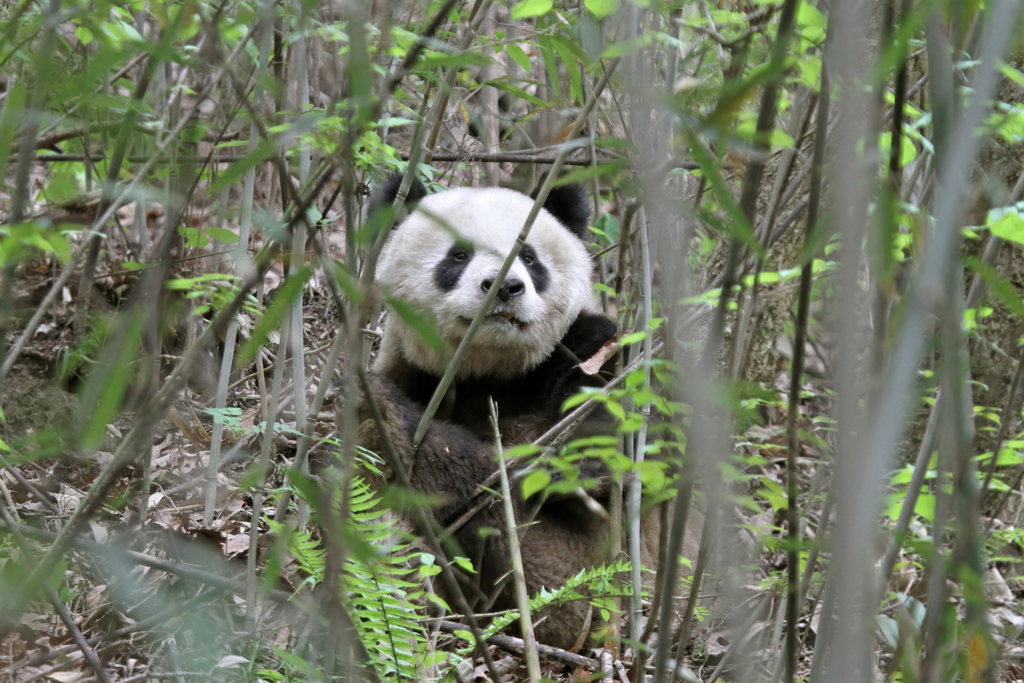
Giant Panda
Ailuropoda melanoleuca
Mammalstrong against birds, fungi
Rare
Pack
While active with another mammal in play, it hits 7 harder (14 with two others).
42

39
Giant Panda
Ailuropoda melanoleuca
Mammalstrong against birds, fungi
Rare
While active with another mammal in play, it hits 7 harder (14 with two others).
Ailuropoda melanoleuca
Photo: James Eaton (original photo) · CC0 (licence text) · cropped
Strong against: it deals 20% more damage to them. Weak against: these types deal 20% more damage to it.
The giant panda (Ailuropoda melanoleuca), also known as the panda bear or simply panda, is a bear species endemic to China. It is characterised by its white coat with black patches around the eyes, ears, legs and shoulders. Its body is rotund; adult individuals weigh 100 to 115 kg (220 to 254 lb) and are typically 1.2 to 1.9 m (3 ft 11 in to 6 ft 3 in) long. It is sexually dimorphic, with males being typically 10–20% larger than females. A thumb is visible on its forepaw, which helps in holding bamboo in place for feeding. It has large molar teeth and expanded temporal fossae to meet its dietary requirements. It can digest starch and is mostly herbivorous with a diet consisting almost entirely of bamboo and bamboo shoots.
The giant panda lives exclusively in six montane regions in a few Chinese provinces at elevations of up to 3,000 m (9,800 ft). It is solitary and gathers only in mating seasons. It relies on olfactory communication and uses scent marks as chemical cues and on landmarks like rocks or trees. Females rear cubs for an average of 18 to 24 months. The oldest known giant panda was 38 years old.
Abridged excerpt from the Wikipedia article Giant panda, by its authors, under the CC BY-SA 4.0 licence.
Vulnerable on the IUCN Red List: that’s what makes this card Rare.
Every Rare card has 130 points, shared between HP, ATK and DEF:
How they’re shared out:

 DEF 39