 …
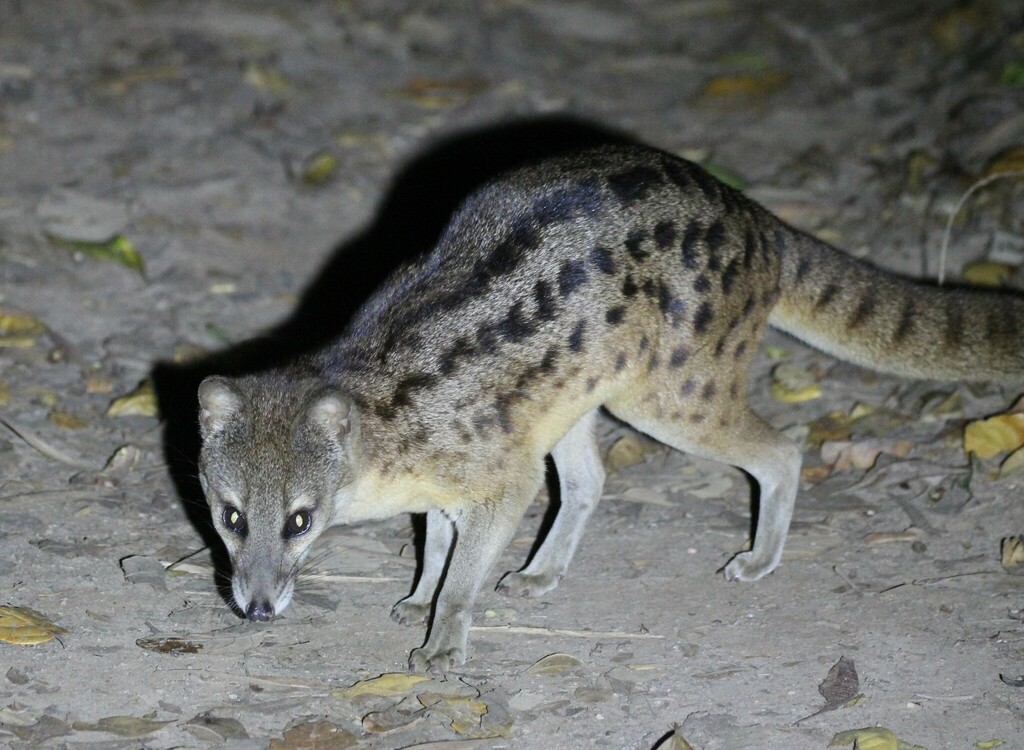
Fanaloka
Fossa fossana
Mammalstrong against birds, fungi
Rare
Pack
While active with another mammal in play, it hits 7 harder (14 with two others).
37

49
Fanaloka
Fossa fossana
Mammalstrong against birds, fungi
Rare
While active with another mammal in play, it hits 7 harder (14 with two others).
Fossa fossana
Photo: © Rob Foster (original photo) · CC BY 4.0 (licence text) · cropped
Strong against: it deals 20% more damage to them. Weak against: these types deal 20% more damage to it.
The Malagasy civet or striped civet (Fossa fossana), also known as the spotted fanaloka or simply fanaloka (Malagasy, [fə̥ˈnaluk]) or jabady, is an euplerid endemic to Madagascar. It is the only species in genus Fossa.
The Malagasy civet is a small mammal, about 47 centimetres (19 in) long excluding the tail (which is only about 20 centimetres (7.9 in)). It can weigh 1.5 to 2.0 kilograms (3.3 to 4.4 lb). It is endemic to the tropical forests of Madagascar. Malagasy civets are nocturnal. It eats small vertebrates, insects, aquatic animals, and eggs stolen from birds' nests. The mating season of the Malagasy civet is August to September and the gestation period is three months, ending with the birth of one young. The Malagasy civet is listed as Vulnerable by International Union for Conservation of Nature (IUCN).
The Malagasy name fanaloka is related to the Malay word pelanduk "mousedeer" (via metathesis) likely due to their similar sizes and silhouette.
Excerpt from the Wikipedia article Malagasy civet, by its authors, under the CC BY-SA 4.0 licence.
Vulnerable on the IUCN Red List: that’s what makes this card Rare.
Every Rare card has 130 points, shared between HP, ATK and DEF:
How they’re shared out:

 DEF 49