 …
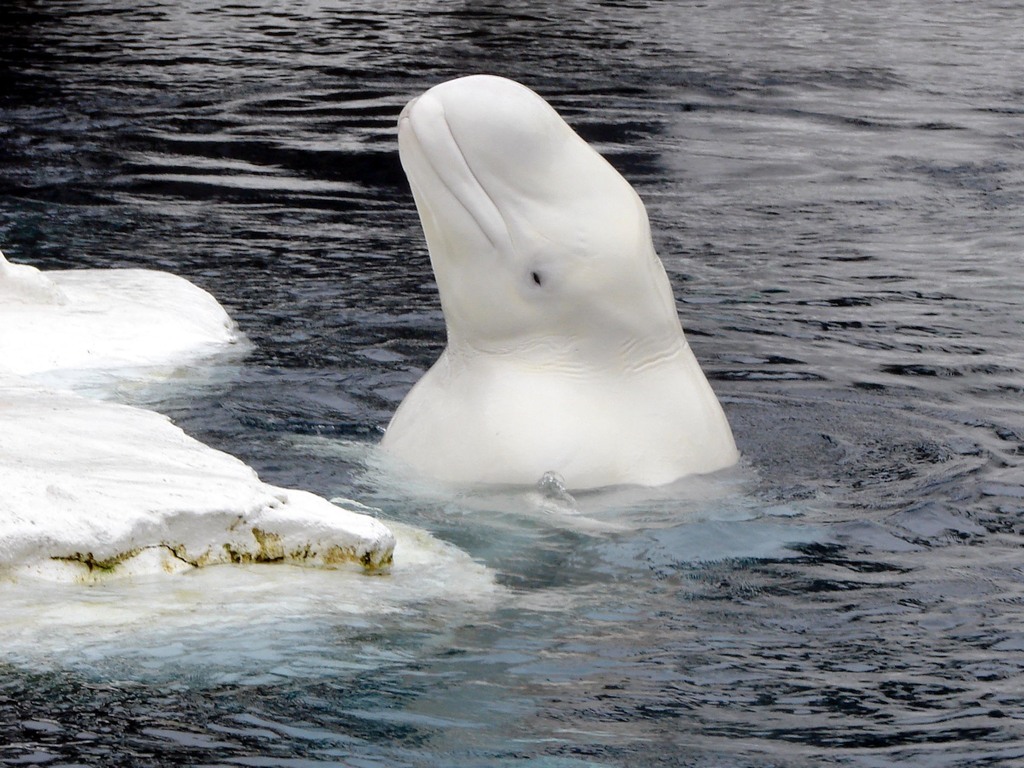
Beluga
Delphinapterus leucas
Mammalstrong against birds, fungi
Common
Pack
While active with another mammal in play, it hits 7 harder (14 with two others).
32

27
Beluga
Delphinapterus leucas
Mammalstrong against birds, fungi
Common
While active with another mammal in play, it hits 7 harder (14 with two others).
Delphinapterus leucas
Photo: © Hafiz Issadeen (original photo) · CC BY 4.0 (licence text) · cropped
Strong against: it deals 20% more damage to them. Weak against: these types deal 20% more damage to it.
The beluga whale or the white whale (Delphinapterus leucas) is an Arctic and sub-Arctic cetacean. It is one of two living members of the family Monodontidae, along with the narwhal, and the only member of the genus Delphinapterus. It is also known as the sea canary, due to its high-pitched calls; and the melonhead, though that more commonly refers to the melon-headed whale, which is an oceanic dolphin.
The beluga is adapted to life in the Arctic, with anatomical and physiological characteristics that differentiate it from other cetaceans. Amongst these are its all-white colour that gives the whale its name; and the absence of a dorsal fin, which allows it to swim under ice with ease. It possesses a distinctive protuberance at the front of its head which houses an echolocation organ called the melon, which in this species is large and deformable. The beluga's body size is between that of a dolphin and a True's beaked whale, with males growing up to 5.5 m (18 ft) long and weighing up to 1,600 kg (3,530 lb). This whale has a stocky body. Like many cetaceans, a large percentage of its weight is blubber (subcutaneous fat). Its sense of hearing is highly developed and its echolocation allows it to move about and find breathing holes under sheet ice.
Abridged excerpt from the Wikipedia article Beluga whale, by its authors, under the CC BY-SA 4.0 licence.
Least Concern on the IUCN Red List: that’s what makes this card Common.
Every Common card has 100 points, shared between HP, ATK and DEF:
How they’re shared out:

 DEF 27