 …
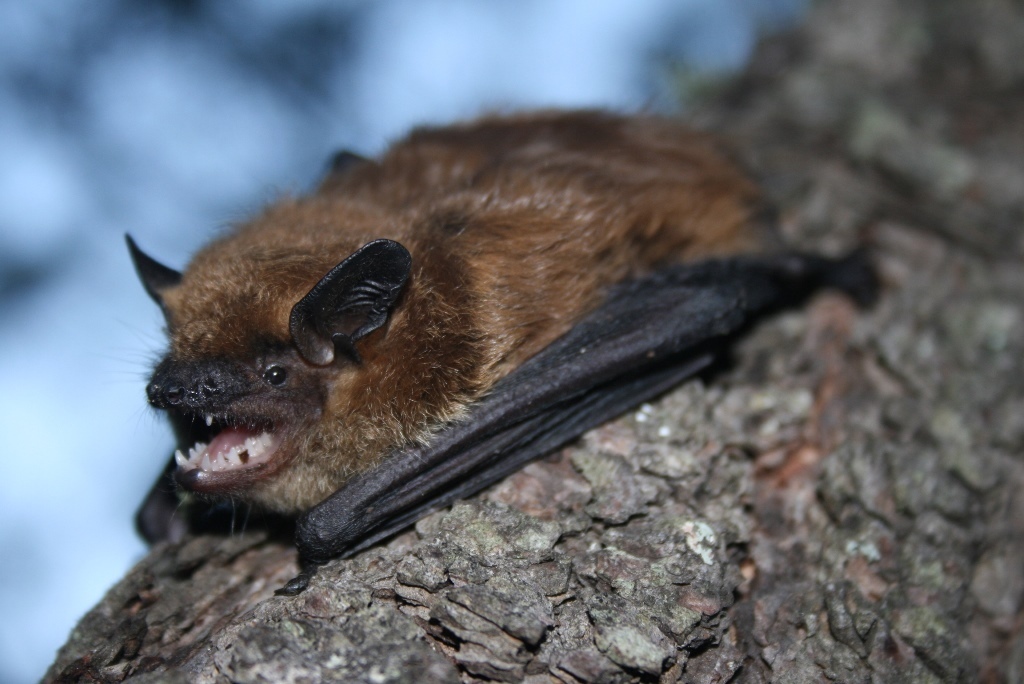
Big Brown Bat
Eptesicus fuscus
Mammalstrong against birds, fungi
Common
Pack
While active with another mammal in play, it hits 7 harder (14 with two others).
35

38
Big Brown Bat
Eptesicus fuscus
Mammalstrong against birds, fungi
Common
While active with another mammal in play, it hits 7 harder (14 with two others).
Eptesicus fuscus
Photo: © Juan Cruzado Cortés (original photo) · CC BY-SA 4.0 (licence text) · cropped
Strong against: it deals 20% more damage to them. Weak against: these types deal 20% more damage to it.
The big brown bat (Eptesicus fuscus) is a species of vesper bat distributed widely throughout North America, the Caribbean, and the northern portion of South America. It was first described as a species in 1796. Compared to other microbats, the big brown bat is relatively large, weighing 15–26 g (0.53–0.92 oz) and possessing a wingspan of 32.5–35 cm (12.8–13.8 in).
Big brown bats are insectivorous, consuming a diverse array of insects, particularly night-flying insects, but especially beetles. Some of the beetles it consumes are serious agricultural pests, including cucumber beetles. They are nocturnal, foraging for prey at night and roosting in sheltered areas during the day such as caves, tunnels, tree cavities, and human structures. Their breeding season is in the fall, shortly before their annual hibernation. After hibernation ends in the spring, females form maternity colonies for giving birth to young. Oftentimes only one offspring is produced per litter, though twins are common in the Eastern US. Lifespans of 6.5 years are considered average.
The big brown bat occurs widely throughout the US, Canada, Central America, and the Caribbean. Its range extends into parts of South America, found as far south as Colombia and Venezuela. It is adaptable to many habitats and is considered a generalist species. The big brown bat is not considered at risk for extinction, and is evaluated as the lowest conservation priority by the International Union for Conservation of Nature (IUCN).
Abridged excerpt from the Wikipedia article Big brown bat, by its authors, under the CC BY-SA 4.0 licence.
Least Concern on the IUCN Red List: that’s what makes this card Common.
Every Common card has 100 points, shared between HP, ATK and DEF:
How they’re shared out:

 DEF 38