 …
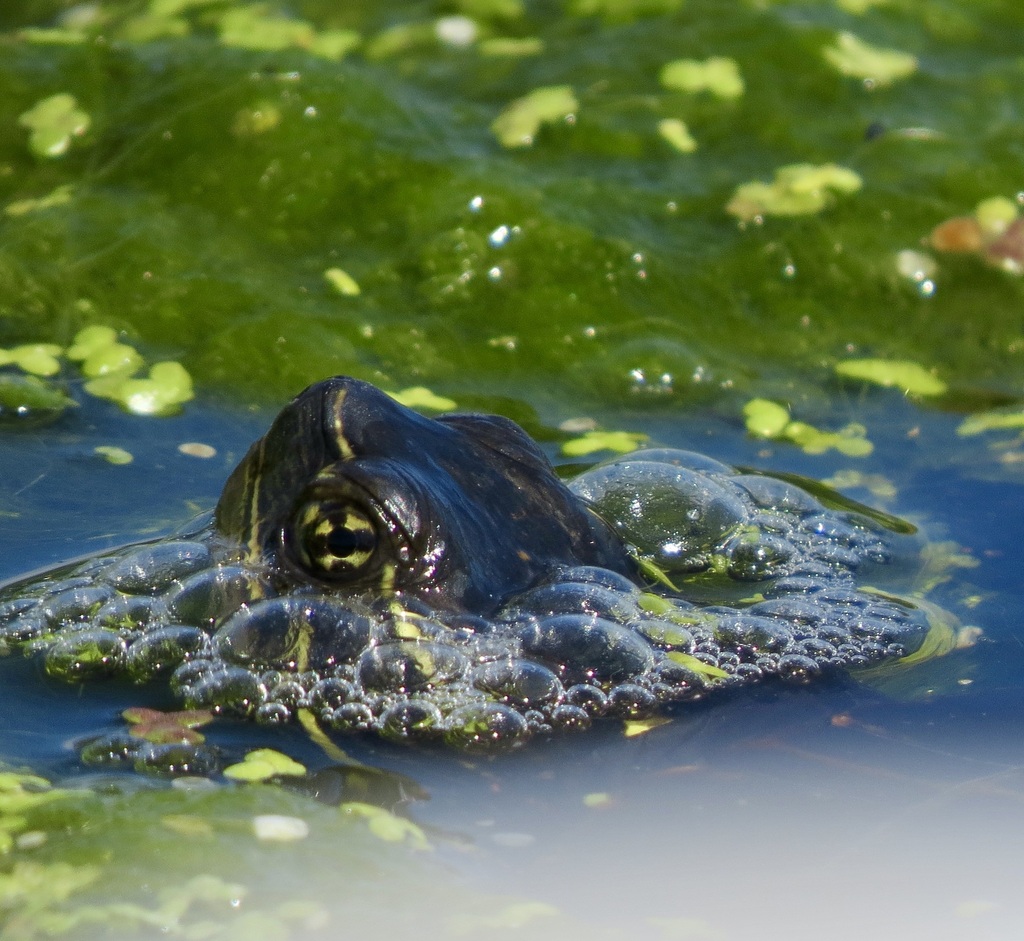
Painted Turtle
Chrysemys picta
Reptilestrong against amphibians, mammals
Common
Scales
While active with another reptile in play, it takes 3 less damage (6 with two others).
38

32
Painted Turtle
Chrysemys picta
Reptilestrong against amphibians, mammals
Common
While active with another reptile in play, it takes 3 less damage (6 with two others).
Chrysemys picta
Photo: © Bernie Paquette (original photo) · CC BY 4.0 (licence text) · cropped
Strong against: it deals 20% more damage to them. Weak against: these types deal 20% more damage to it.
The painted turtle (Chrysemys picta) is North America's most widespread native turtle, with a rich evolutionary history that stretches back 15 million years. As resilient survivors belonging to the pond turtle family Emydidae, these turtles adapted creatively to the planet's changing climate. During the last Ice Age, they split into distinct groups and evolved into three regionally unique subspecies: the Eastern painted turtle (found along the Atlantic coast), the Midland painted turtle (living around the Great Lakes), and the Western painted turtle (the largest group, spanning the west coast and Canada). Scientists still debate whether a fourth group, the Southern painted turtle, is its own separate species or another subspecies. Because they are highly adaptable and widely distributed across fresh waters from Canada to Mexico, their conservation status is listed as Least Concern, meaning they are currently thriving in the wild.
It lives in relatively slow-moving fresh waters, from southern Canada to northern Mexico, and from the Atlantic to the Pacific. They have been shown to prefer large wetlands with long periods of inundation and emergent vegetation.
Abridged excerpt from the Wikipedia article Painted turtle, by its authors, under the CC BY-SA 4.0 licence.
Least Concern on the IUCN Red List: that’s what makes this card Common.
Every Common card has 100 points, shared between HP, ATK and DEF:
How they’re shared out:

 DEF 32