 …
American Woodcock
Scolopax minor
Birdstrong against fish, reptiles
Common
Swoop
While active with another bird in play, it hits 6 harder on its first attack after entering play (12 with two others).
32

37
American Woodcock
Scolopax minor
Birdstrong against fish, reptiles
Common
While active with another bird in play, it hits 6 harder on its first attack after entering play (12 with two others).
Scolopax minor
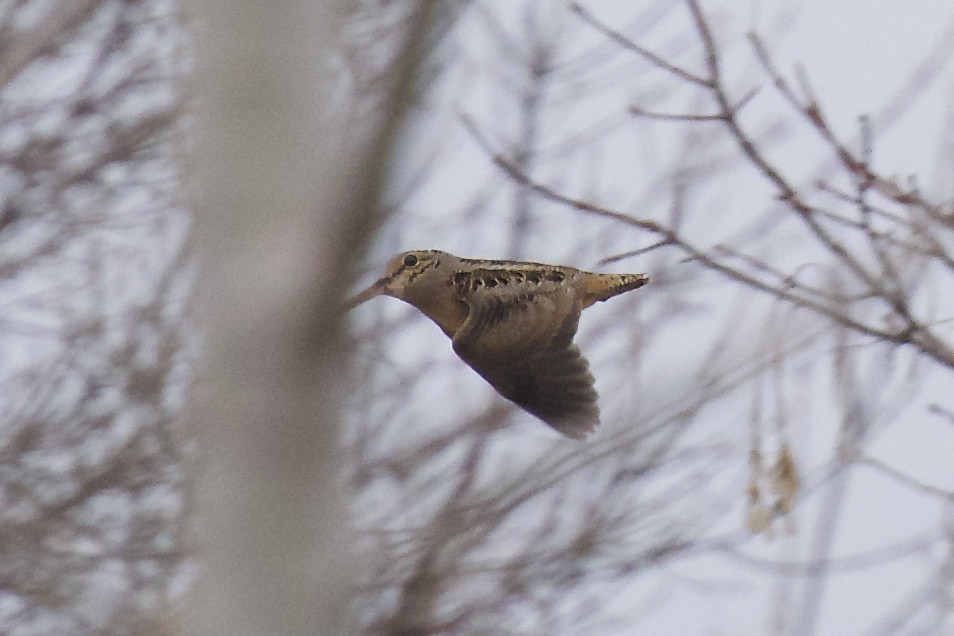
Photo: © Owen Strickland (original photo) · CC BY 4.0 (licence text) · cropped
Strong against: it deals 20% more damage to them. Weak against: these types deal 20% more damage to it.
The American woodcock (Scolopax minor), sometimes colloquially referred to as the timberdoodle, mudbat, becasse, bogsucker, brush snipe, night partridge, or Labrador twister is a small shorebird species found primarily in the eastern half of North America. Woodcocks spend most of their time on the ground in brushy, young-forest habitats, where the birds' brown, black, and gray plumage provides excellent camouflage.
The American woodcock is the only species of woodcock inhabiting North America. Although classified with the sandpipers and shorebirds in the family Scolopacidae, the American woodcock lives mainly in upland settings.
The population of the American woodcock has fallen by an average of slightly more than 1% annually since the 1960s. Most authorities attribute this decline to a loss of habitat caused by forest maturation and urban development.
In 2008, wildlife biologists and conservationists released an American woodcock conservation plan presenting figures for the acreage of early successional habitat that must be created and maintained in the United States and Canada to stabilize the woodcock population at current levels, and to return it to 1970s densities.
Excerpt from the Wikipedia article American woodcock, by its authors, under the CC BY-SA 4.0 licence.
Least Concern on the IUCN Red List: that’s what makes this card Common.
Every Common card has 100 points, shared between HP, ATK and DEF:
How they’re shared out:

 DEF 37