 …
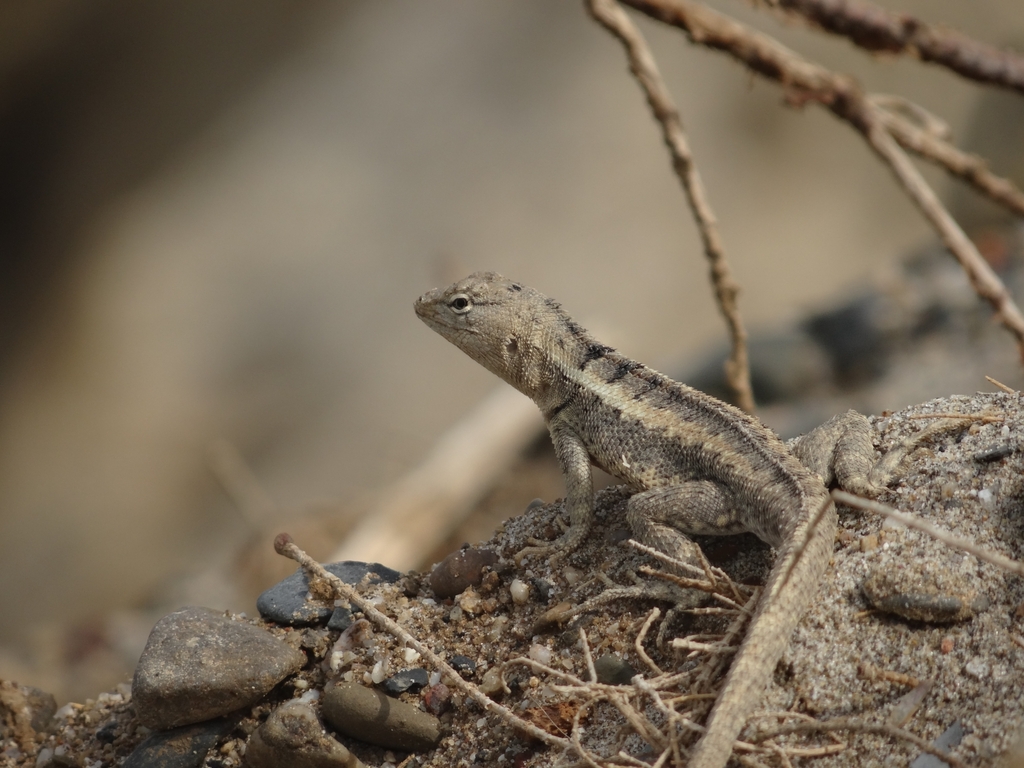
Knobbed Pacific Iguana
Microlophus occipitalis
Reptilestrong against amphibians, mammals
Common
Scales
While active with another reptile in play, it takes 3 less damage (6 with two others).
32

40
Knobbed Pacific Iguana
Microlophus occipitalis
Reptilestrong against amphibians, mammals
Common
While active with another reptile in play, it takes 3 less damage (6 with two others).
Microlophus occipitalis
Photo: © Luis Martin Stivanello (original photo) · CC BY 4.0 (licence text) · cropped
Strong against: it deals 20% more damage to them. Weak against: these types deal 20% more damage to it.
Microlophus occipitalis, colloquially known as the knobbed Pacific iguana, is a lizard included within the Tropiduridae family. It is a member of the Microlophus genus and thus also considered a lava lizard. The knobbed Pacific iguana is found primarily in Western Peru and Ecuador, lining the coasts. The habitats of the knobbed Pacific iguana can be considered to be both broad and diverse as they are typically found in many different places such as beaches, lomas, and all the way to desert regions. This diversity is furthered as these lizards can also be found in open areas, between rocks, or bushes.
The knobbed Pacific iguana displays distinct sexual dimorphism as seen by the different sizes and appearances of the male and females. Males are significantly larger and as a whole species, knobbed Pacific iguanas can range from 50–80 mm (2.0–3.1 in) in snout-vent length. The two sexes also possess different coloration with males most often lacking color and females having a range of red to white lateral neck folds. These varying colors play a role in a prominent feature of knobbed Pacific iguanas in that these different shades can represent distinct stages of reproduction and signal information to mates.
Like most other lizards, the knobbed Pacific iguana is cold-blooded and relies on basking and other strategies of thermoregulation to maintain an ideal body temperature.
Excerpt from the Wikipedia article Microlophus occipitalis, by its authors, under the CC BY-SA 4.0 licence.
Least Concern on the IUCN Red List: that’s what makes this card Common.
Every Common card has 100 points, shared between HP, ATK and DEF:
How they’re shared out:

 DEF 40