 …
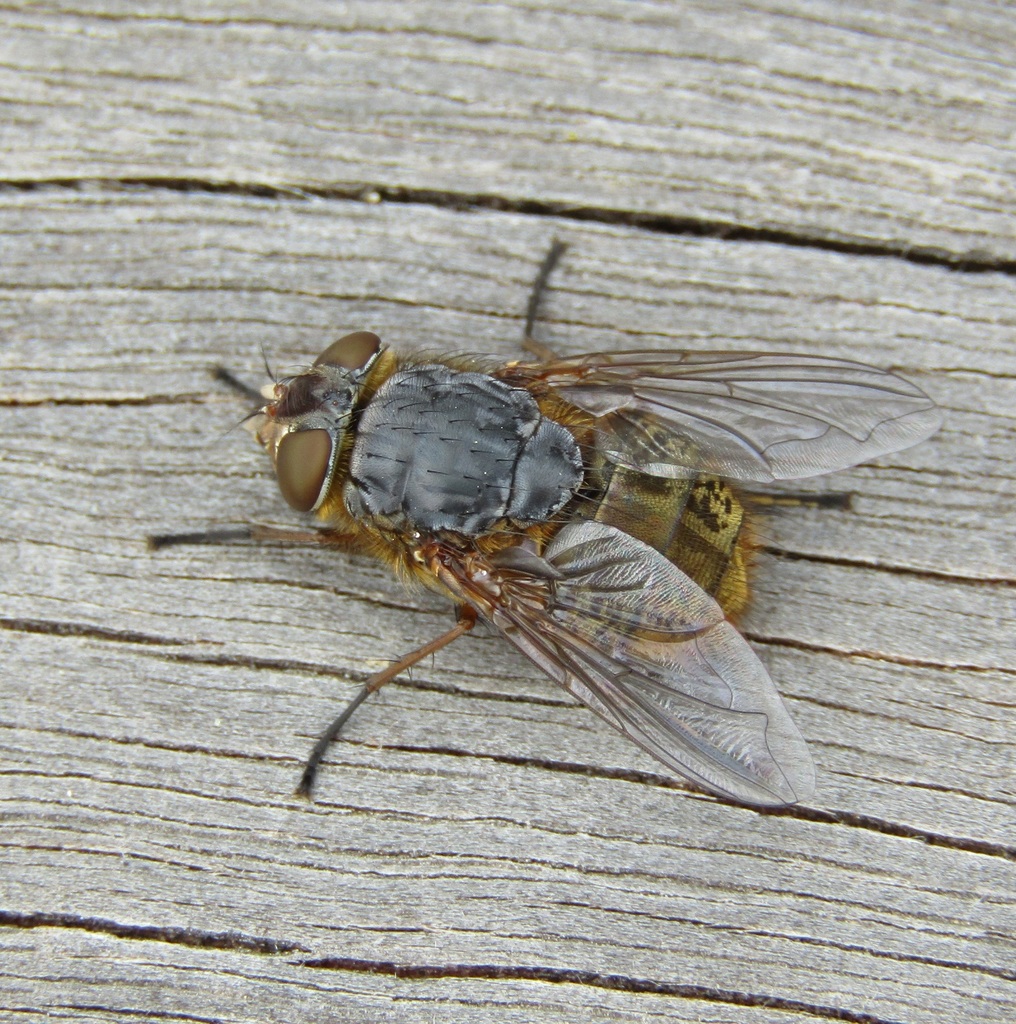
Brown Blowfly
Calliphora stygia
Insectstrong against fungi, fish
Common
Swarm
While active with another insect in play, each of its attacks also hits the opposing bench for 10, without knocking them out (20 with two others).
40

40
Brown Blowfly
Calliphora stygia
Insectstrong against fungi, fish
Common
While active with another insect in play, each of its attacks also hits the opposing bench for 10, without knocking them out (20 with two others).
Calliphora stygia
Photo: © wild_wind (original photo) · CC BY 4.0 (licence text) · cropped
Strong against: it deals 20% more damage to them. Weak against: these types deal 20% more damage to it.
Calliphora stygia, commonly known as the brown blowfly, or rango tumaro in Māori, is a species of blow-fly that is found in Australia and New Zealand. The brown blowfly has a grey thorax and yellow-brown abdomen.
This fly is typically one of the first and primary colonizers on corpses, and are considered to be necrophagous and parasitic. It is able to colonize a body within hours after death, when it is considered to be in the "fresh" stage of decomposition. Regardless of the environment a body is in, adult C. stygia will lay eggs in any, and all orifices such as, but not limited to eyes, nose, mouth, and wounds that occur before and after death.
Colonies are formed from larval masses that congregate in the abdomen and chest cavity of a corpse. C. stygia, being native to Australia and New Zealand, co-exist with other necrophagous flies such as C. hilli, L. sericata, and C. vicine. C. stygia is part of a natural process of decomposition called succession: flies that tend to colonize after C. stygia, are C. rufifaccies and H. rostra.
Excerpt from the Wikipedia article Calliphora stygia, by its authors, under the CC BY-SA 4.0 licence.
No global status on the IUCN Red List: that’s what makes this card Common.
Every Common card has 100 points, shared between HP, ATK and DEF:
How they’re shared out:

 DEF 40